

Boston & North Shore Roofing
Roof Ventilation Installation and Attic Insulation in Boston, MA
Ice dams, attic frost and a top floor you cannot cool all trace back to one thing: air that cannot travel from the soffit to the ridge. We seal the ceiling, correct the insulation, and open a real vent path.
- Intake and exhaust balanced by net free area
- Ridge slot actually cut, not just capped
- A baffle in every rafter bay
- Bath fans ducted outside, never into the attic
Most attic trouble is airflow trouble. Cold air has to enter low at the soffit and leave high at the ridge. Block either end and the attic becomes a moisture trap in January and an oven in July.
Boston sits at or below freezing about 92 days a year, but only about 23 stay frozen all day. That gap is the melt-refreeze engine behind ice dams, and warm attic air starts the melt.
We treat the attic as part of the roof. Seal, insulate, then open a clear channel from eave to ridge. We do it across Boston and the surrounding towns, on housing stock often a century old.
- Intake and exhaust balanced by net free area
- Ridge slot actually cut, not just capped
- A baffle in every rafter bay
- Bath fans ducted outside, never into the attic
Free Attic Ventilation & Insulation Estimate
Know The Signs
Signs your attic is not breathing
Ventilation problems rarely look like roof problems. Here is what they look like from inside.
Frost on the deck and nail tips
Indoor moisture freezing on cold sheathing. It thaws on the first mild day and drips like a leak.
A ceiling stain with no rain
Water on a clear February morning is condensation, not a hole. Chasing it across the roof finds nothing.
Soffit vents with no daylight behind them
Insulation shoved into the eave, or vinyl soffit hung over solid wood with no holes cut. Intake is zero.
Dark blotches on the north-slope boards
The sheathing stayed damp all winter. Board decking holds moisture far longer than plywood.
Ice at the same eave every winter
Repeat dams point upstairs, not at the shingles. [Ice dam removal](/services/ice-dam-removal-boston/) clears the season. Ventilation ends the pattern.
Shingles curling on one slope only
That slope is cooking from underneath. A [roof inspection](/services/roof-inspection-boston/) covering the attic side tells you why.
Intake and exhaust have to balance
Ventilation is measured in net free area: the open square inches a vent delivers after screen and louvers. The residential code sets 1 square foot per 150 square feet of attic floor, and 1 per 300 when 40 to 50 percent sits high on the roof and the rest at the eave. Confirm your number with the building official.
- Intake should meet or beat exhaust, never the reverse
- Exhaust that outruns intake pulls heated air from your ceiling
- A vent's stamped size is not its net free area
- Every rafter bay needs a baffle above the insulation
The mistakes we find in Boston attics
Exhaust with no intake
Somebody adds a ridge vent, the attic still runs hot, so they add a powered fan. Now the roof takes makeup air from the house through every ceiling gap. A strong fan can backdraft a water heater.
Two exhaust types on one attic
Gable louvers plus a ridge vent short-circuits the system. The ridge draws from the nearest opening, the gable, and the soffits stop moving air. Pick one path and close the other.
A ridge cap over an uncut ridge
We pull ridge vent off roofs every year and find solid sheathing under it. The slot was cut too narrow, stopped short, or never cut. It vents nothing.
Boston building stock vents differently
Story-and-a-half capes
The biggest ice dam generator we see. Bedrooms sit under the deck, insulation packs the rafter bay solid, and the eave cannot breathe. Post-war capes and ranches across West Roxbury, Saugus and Lynnfield are full of them. The fix is a vent chute in every bay, or closed-cell foam instead.
Three-deckers and flat center decks
The form matured around 1890 in Dorchester, and survivors are sheathed in boards, not plywood. Hipped slopes leave almost no ridge and the center deck none. Those get edge and deck vents over a sealed ceiling, as our guide to preventing ice dams on a Boston triple-decker explains.
Mansards and First Period antiques
A Back Bay or South End mansard has no soffit and no ridge. Venting happens at the seam between the slate face and the low-slope top, or not at all. Ipswich holds 59 houses with pre-1725 elements: hand-hewn rafters, gapped boards, no ridge path.
Insulation, and what comes out first
Insulation only works over a sealed ceiling. Blow cellulose across open top plates and you have built an expensive air filter. Seal first, then insulate full depth over the exterior wall without crushing the vent channel.
- Duct every bath and kitchen fan outside, never into the attic
- Weatherstrip and insulate the attic hatch like a door
- Box and seal recessed lights before burying them
- Bag out wet or moldy insulation instead of adding on top
Our Process
How we correct attic ventilation and insulation
Order matters. Insulating an attic that leaks air only buries the problem.
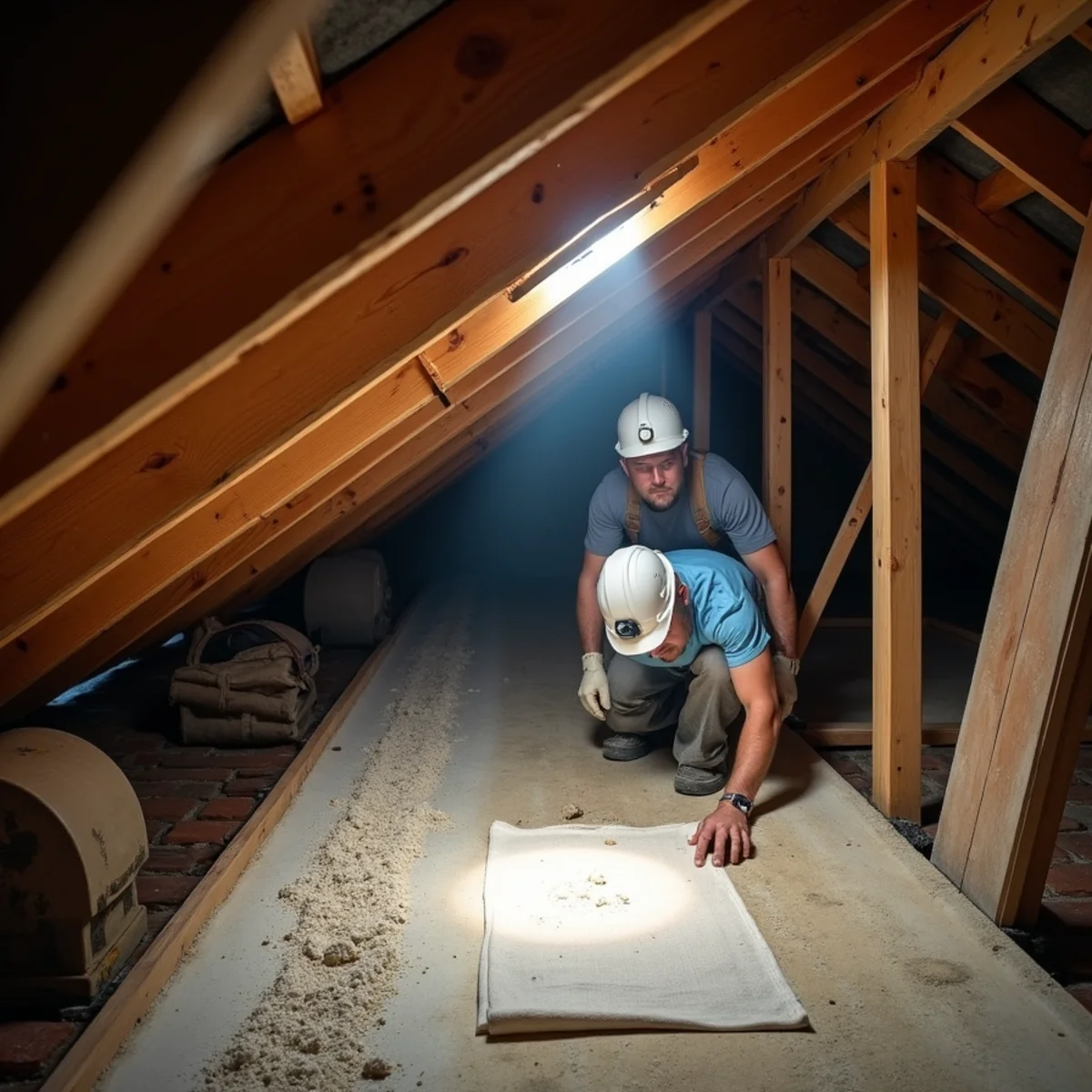
We get into the attic
Every estimate starts with a light overhead: vent count, baffle condition, insulation depth, frost lines, bath fan terminations.
Net free area, measured not guessed
We size the attic floor against what is genuinely open. Painted-shut louvers and blocked soffits count as zero.
Air sealing first
Top plates, chimney and plumbing chases, the hatch, recessed cans. Warm air stops at the ceiling or nothing above works.
Intake before exhaust
We cut or clear soffit venting and set a baffle in every rafter bay so insulation cannot slide back over it.
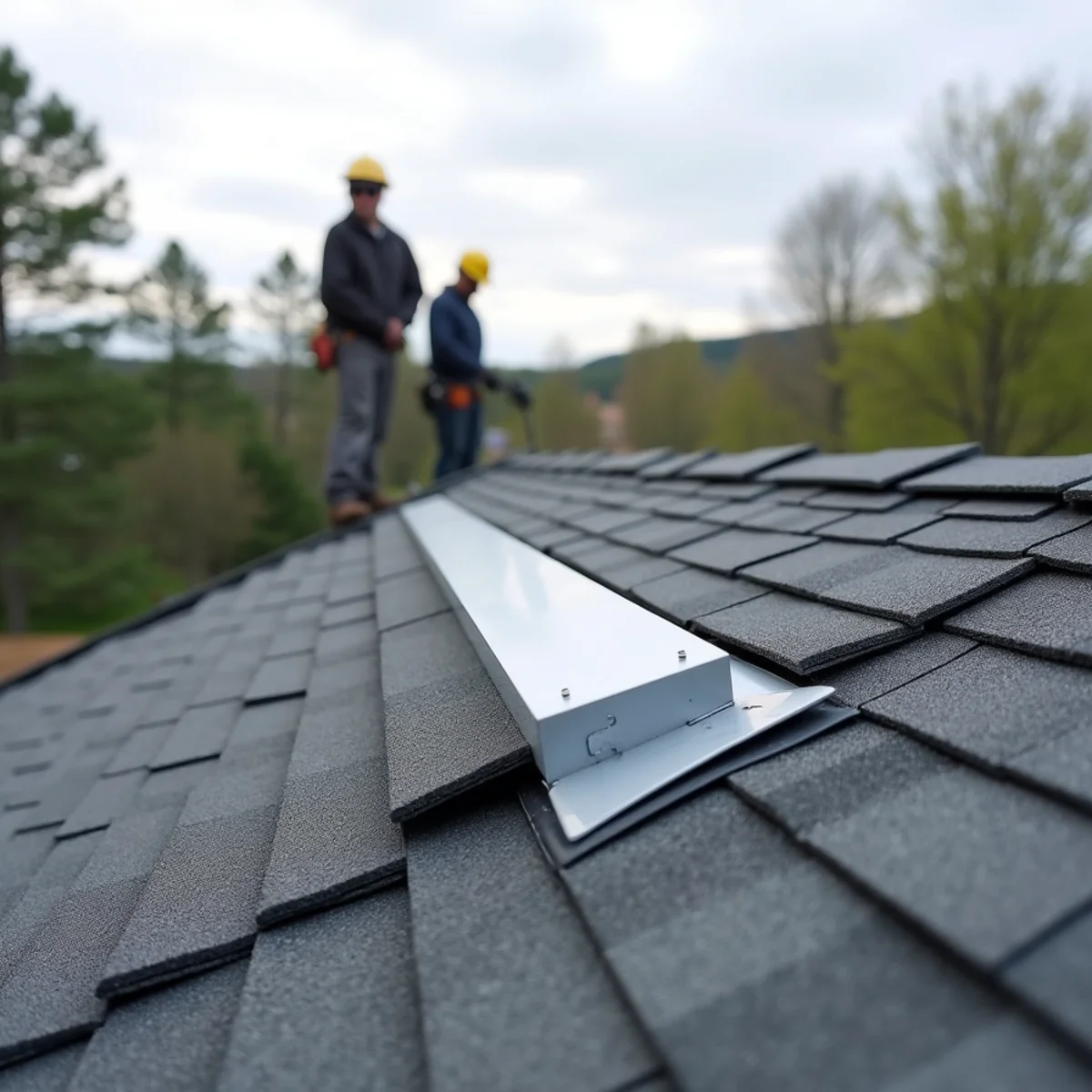
Exhaust cut correctly
A ridge vent needs a real slot through the sheathing, held back from the ends, with an external baffle. No ridge means deck vents high on the slope.
Insulate to depth, verify cold
Blown cellulose or fiberglass to the depth energy code calls for in our climate zone. Depth rulers stay in place.
On The Roof
What attic ventilation & insulation looks like in progress
What Drives The Price
What attic ventilation and insulation costs here
This work prices by what is already in the attic, not by square footage.
Access and headroom
A walk-up with a floor is quick. A pull-down hatch and thirty inches at the eave is not.
How much air sealing
A 1920s balloon-framed house with an open masonry chase takes far more foam than a 1958 ranch.
What is up there now
Wet or compressed insulation gets bagged and hauled. Gray, pebbly vermiculite is tested before anyone touches it.
Cutting intake into the eave
Open rafter tails are fast. A solid plaster or beadboard soffit worked from staging is not.
The exhaust the roof allows
A straight gable ridge is cheapest. A mansard, low-ridge hip or flat center deck each need a different vent.
Doing it during a reroof
Ridge cutting and baffles cost less while the roof is open. Bundling with a [full roof replacement](/services/roof-replacement-boston/) saves a mobilization.
Greater Boston cost drivers, not a quote. Ask about a no-cost Mass Save home energy assessment too. It covers insulation and air sealing, not roof work.
FAQ
Attic Ventilation & Insulation questions we get asked
Straight answers, including the ones that cost us work sometimes.
Go up on a cold morning with a flashlight. Frost on the nail tips or dark staining on the sheathing answers it.
No. A vented attic should run near outdoor temperature. Air sealing and insulation at the ceiling plane keep the house warm.
Yes. Shingle manufacturers require ventilation to code, and a deck cooked from below is a common reason a claim gets denied.
Usually. Soffit cutting, baffles and deck vents go in without a tear-off. A continuous ridge slot is cheaper while the roof is already open.
It depends on the assembly. An open attic floor wants air sealing plus blown cellulose. A cape with no vent channel room is where closed-cell foam earns its price.
Related roofing services
Work that often comes up on the same roof.
- Ice Dam Removal & PreventionSteam ice dam removal, roof snow raking and the attic work that stops the dam from coming back. Photos and dates for your insurance file.Learn more
- Roof InspectionsFree, documented roof inspection. We get on the roof, check the attic, and hand you photos, a written report, and an honest verdict.Learn more
- Roof ReplacementFull tear-off, deck repair and a code-correct ice barrier. Written scope, permit filed for you, magnet sweep at the end of every day.Learn more
Read more before you decide
Longer guides on the parts of this that homeowners ask about most.
- WinterHow to Prevent Ice Dams on a Boston Triple-Decker Before They Wreck the Third FloorIce dams on a three-decker start with heat escaping the top-floor ceiling, not with the shingles. Here is the order that actually stops them, what Massachusetts code requires at the eave, and when heat cables are worth it.5 min read
- MaterialsHow Long Does a Roof Last in New England? Lifespan by MaterialManufacturer lifespans are written for a mild climate. Here is what asphalt, slate, metal, cedar and membrane actually deliver in a place with 69 freeze-thaw days a year — and the five things that cut those numbers short.6 min read
Attic Ventilation & Insulation across Greater Boston
We run this service in 34 communities. Here is where it comes up most often:
Free On-Site Inspection
Get a real number for attic ventilation & insulation on your roof
Free on-site inspection, photos of what we find, and a written itemized estimate you can compare line by line against any other bid.
- 5.0 from 4 Google reviews
- Licensed & fully insured in Massachusetts
- Written workmanship warranty on every roof
Browse all 15 roofing services or see what our customers say.