
How to Prevent Ice Dams on a Boston Triple-Decker Before They Wreck the Third Floor
Ice dams on a three-decker start with heat escaping the top-floor ceiling, not with the shingles. Here is the order that actually stops them, what Massachusetts code requires at the eave, and when heat cables are worth it.

Ice dams are not a roof problem. They are a heat problem. Preventing ice dams on a Boston triple-decker takes four steps in this order: air seal the top-floor ceiling, insulate it evenly, ventilate so the deck stays as cold as the outside air, and run ice barrier membrane under the roofing as the backstop. Skip the first three and you will pay somebody to steam your eaves every February.
You know the picture. Icicles off the third-floor eave in January. A brown ring on the top-floor ceiling two days after a thaw. The middle of the roof bare, and a hard gray ridge of ice sitting on the last three feet above the gutter.
That ridge is the dam. Everything above it is a shallow pond, and asphalt shingles are not a pond liner. Water backs up under the courses, reaches the board sheathing, and comes into the top unit. Most of the fix does not happen on the roof.
Why Ice Dams Form in Massachusetts
Boston averages 49.2 inches of snow a year at Logan under the 1991-2020 NOAA normals. The snow is not the problem. The temperature pattern is. Boston gets about 92 days at or below 32 degrees but only about 23 that stay frozen all day. That 69-day gap is a freeze-thaw machine, and it is the same one that cracks chimney crowns and delaminates slate.
Add heat leaking through the ceiling and the cycle runs even on a cold day. A warm deck melts the snowpack from underneath. That water runs down to the eave, which hangs past the heated wall and sits at outdoor temperature, and freezes there. The dam grows uphill.
This is a documented insurance event. In February 2015, at the tail of the 110.6-inch winter at Logan that is still the snowiest season since records began in 1891, Arbella was on pace for double its prior-year claim volume and a Wellesley Hills agency reported a tenfold increase.
Why the Triple-Decker Is the Worst Case
The three-decker matured around 1890 in Dorchester as the streetcar lines pushed out. The 1912 Tenement House Act banned kitchens above the second floor, roughly 36 municipalities outlawed the form by 1920, and construction stopped by the 1930s. Every one still standing in South Boston or Somerville is 100 to 140 years old.
- Board sheathing, not plywood. Warm air moves through the gaps between boards, and once water gets past the shingles those boards soak and rot.
- Two roof systems. A hipped or low-slope perimeter wrapped around a flat central deck. The transition is where leaks start.
- Three units of stacked heat. Stack effect drives warm air from all three floors up under one deck.
- Balloon framing and open party-wall bays. Air runs from the basement to the roof with nothing stopping it.
- Brutal access. Four stories of staging, rear porch stacks in the way, no side setback against the neighbor.
A three-decker is not an old house with a cold attic. It is a chimney with a roof on it. That is why the same eave dams every winter.
The Fix, in Order
1. Air seal the top-floor ceiling
People skip this because it is invisible once it is done. Every penetration through the top-floor ceiling leaks heat straight to the deck: recessed lights, the attic hatch, wire and pipe chases, interior top plates. Seal them before you add an inch of insulation.
2. Insulate to a continuous depth
Uneven insulation makes uneven melting, and uneven melting makes dams. You want consistent coverage with nothing crushed flat against the sheathing at the eave. There is almost no room out there on a low-slope roof, which is where baffles earn their money. Our attic ventilation and insulation work in Boston starts here because it costs less than roofing and fixes more.
3. Keep the deck cold
Ventilation needs intake low and exhaust high, in balance. Soffit vents packed shut with old fiberglass are the most common thing we find. A hipped three-decker has barely any ridge to work with, so the venting plan has to be drawn for that roof. Snow that never melts cannot refreeze at the eave.
4. Put the membrane where code says
Under 780 CMR R905.1.2, asphalt shingles, metal shingles, mineral-surfaced roll roofing, slate and slate-type, and wood shingles and shakes all require an ice barrier: two cemented layers of underlayment or a self-adhering polymer-modified bitumen sheet. It runs from the lowest roof edge to not less than 24 inches inside the exterior wall line. On slopes of 8:12 or greater it must also extend not less than 36 inches measured along the slope.
On a deep three-decker overhang, 24 inches inside the wall line often means two full courses of membrane, not one. And if the roof is slate, clay tile, cement tile, wood shake, or asbestos-cement, code requires full removal at reroof. Those can never be overlaid, so there is no shortcut past the underlayment.
The flat central deck is its own system: membrane, drainage to the leaders, clean parapet terminations. Water ponding and freezing up there is a flat roof replacement in Boston conversation, not a patch. City reroofs run through an ISD short-form permit at $20 plus $10 per $1,000 of the work estimate.
Heat Cables Are a Tool, Not a Cure
Heat cable does not prevent an ice dam. It melts a channel through one so water can drain. That is real work on a shaded Jamaica Plain eave that cannot be vented, or a valley dumping onto a lower roof. It is not a substitute for the four steps above, it runs your electric bill up all winter, and it belongs on a dedicated GFCI circuit. If a contractor pitches cables as the whole answer, get a second opinion.
Gutters, Ice, and Weight
Gutters do not cause ice dams. They make them worse once they fill solid, because the dam gets a base and the water has nowhere to go. Correctly pitched gutters with leaders that carry water off the building are part of the system, which is why gutter installation in Boston lands on the same work order as an eave rebuild.
Weight matters too. Massachusetts assigns design ground snow load by municipality: Boston, Cambridge, Somerville, Quincy, Chelsea, and Revere sit at 40 psf, Danvers, Ipswich, and Gloucester at 50 psf. Those come from the 780 CMR Eighth Edition table, so confirm your address with the local building official. Ice is far denser than fresh snow.
Will Insurance Cover an Ice Dam Leak in Massachusetts?
Often yes for the sudden interior water damage. Frequently no for the ice removal itself, and almost never for the underlying cause if the adjuster decides the ventilation problem has been there for years. Policies differ. Read yours and call your agent before authorizing work.
One thing is not a gray area. If a contractor offers to cover, waive, or rebate your insurance deductible, walk away. That is illegal in Massachusetts. Verify a roofer's Home Improvement Contractor registration free on the state licensee list before you sign: Guaranty Fund claims cap at $10,000 per project, and violations of c. 142A are per se violations of c. 93A, which carries treble damages and attorney's fees.
Ask who holds the Construction Supervisor License too. The Specialty CSL for Roof Covering allows replacing up to 25 percent of sheathing and sistering rafters, which is exactly what rotted three-decker boards need.
If There Is Already Ice on the Eave
- Do not chip at it with a hatchet or ice pick. You will punch holes in the roofing and the dam returns in a week.
- Do not pressure wash. Low-pressure steam is the only method that removes ice without destroying shingles.
- Rake the lower three or four feet of snow from the ground, never off a ladder footed in ice.
- Use calcium chloride, not rock salt, to open a drainage channel. Rock salt eats flashing and gutters.
- Photograph everything before cleanup. Dated photos are the strongest thing you can hand an adjuster.
Then call somebody with a steamer. Ice dam removal in Boston is emergency work in February, and the crews who do it without wrecking the roof book out fast.
Fix It Once, Before Next Winter
The right time to solve an ice dam is July. Nobody is rushing, the attic is open, staging goes up safely, and you are not paying winter emergency rates. Paulo walks every roof and writes every estimate himself, so you get a straight read on where the air is leaking and whether the eave membrane is where code requires.
We are licensed and insured in Massachusetts, and HIC and CSL credentials come with every estimate. If your third-floor ceiling has a stain you would rather not see again, get a free roof estimate or call (209) 758-8550.
The points above, one at a time
A visual index of what each one actually looks like on a Massachusetts roof.
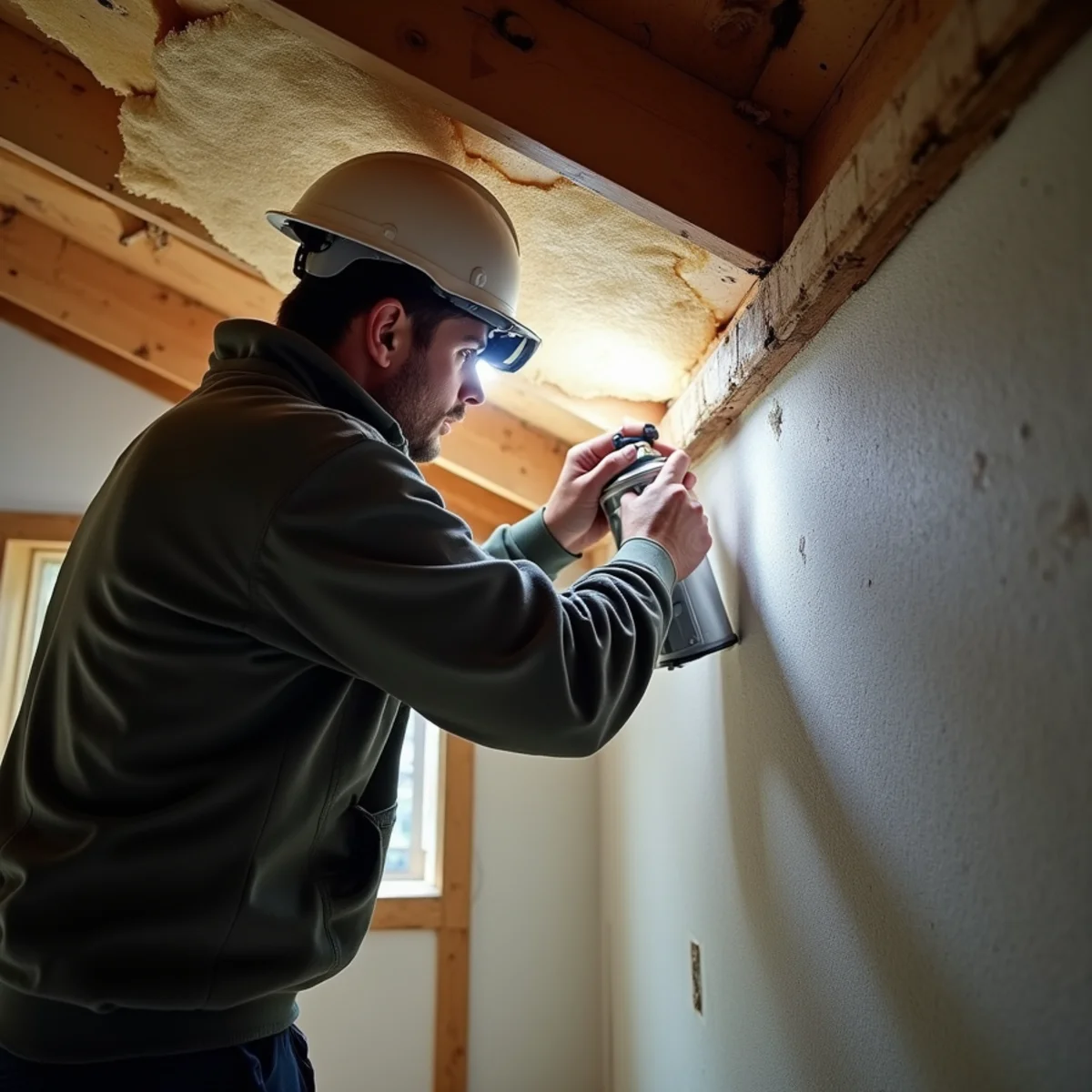
Air sealing ceiling penetrations from the attic of a Boston triple-decker 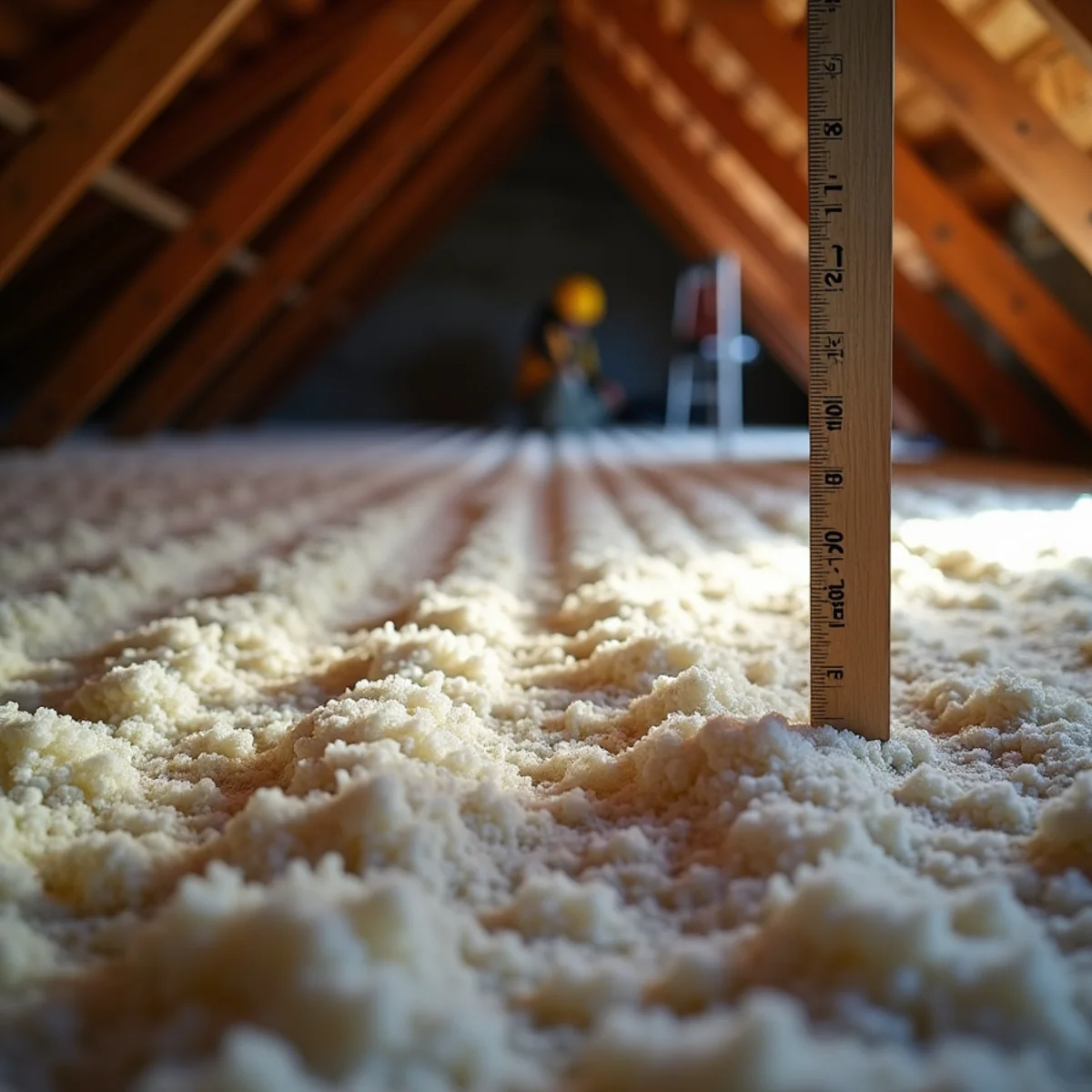
Blown insulation at a continuous measured depth across a triple-decker attic 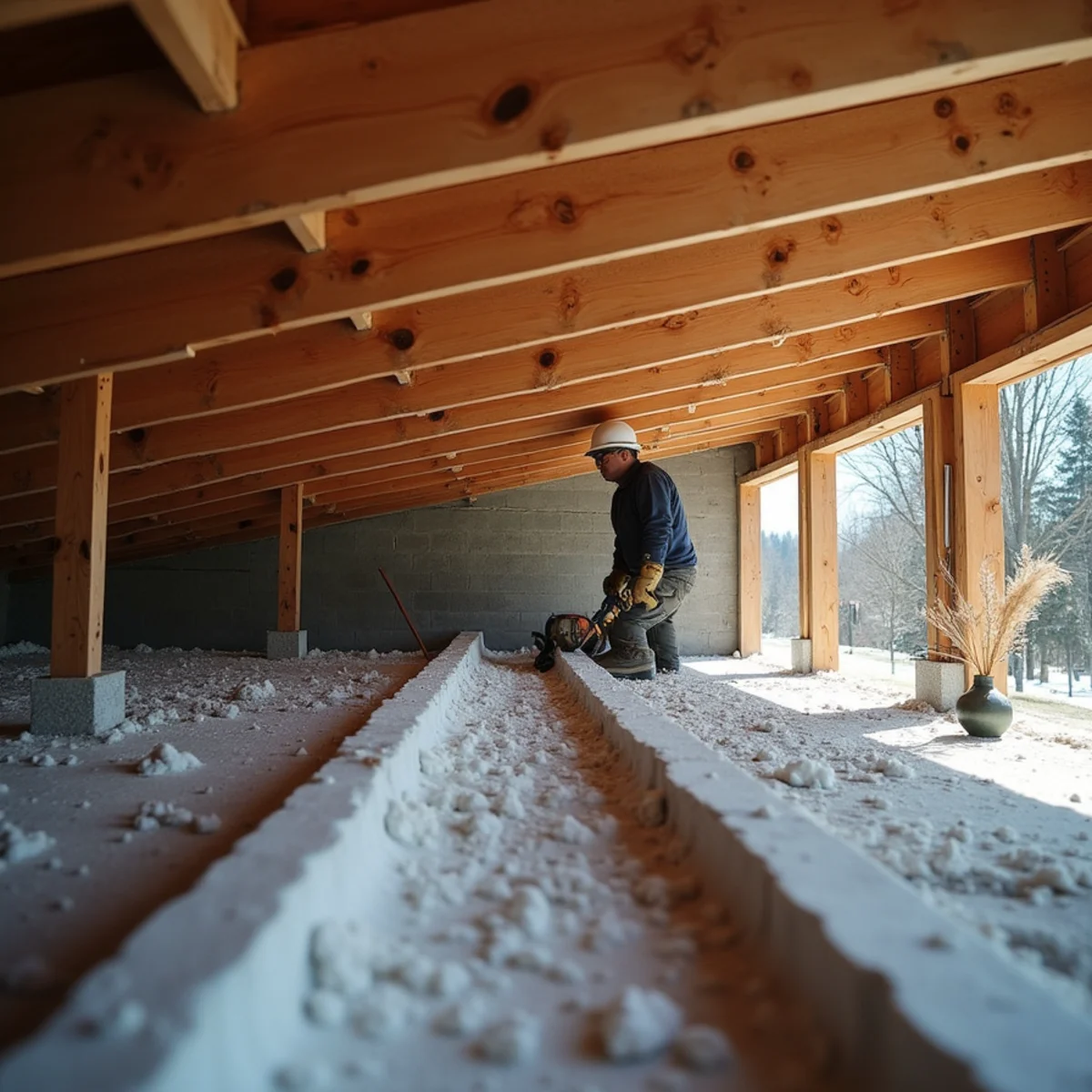
Clear soffit-to-ridge air path keeping a roof deck cold in winter 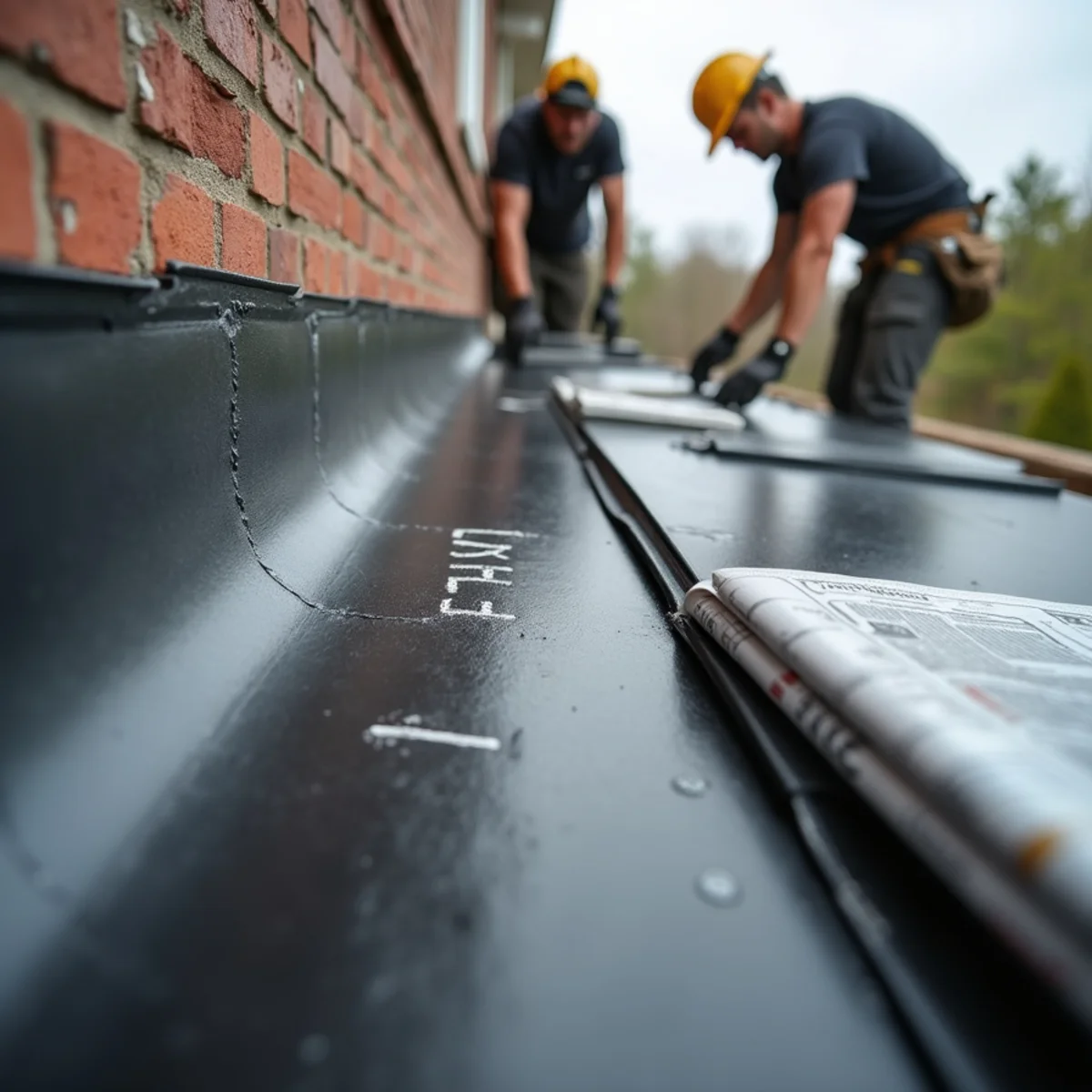
Two courses of ice and water shield run past the wall line at the eave
Frequently asked questions
Heat escaping the top-floor ceiling warms the roof deck and melts the snow sitting on it. That meltwater runs to the eave, which hangs past the heated wall and stays at outdoor temperature, and refreezes into a ridge of ice. Boston's roughly 69-day gap between days that touch freezing and days that stay frozen through is what makes the cycle repeat all winter.
No. Heat cables melt a channel through a dam so water can drain, but they do not stop the dam from forming. They are useful on a shaded eave or a valley that cannot be vented, installed on a dedicated GFCI circuit. Treat them as a supplement to air sealing, insulation, and ventilation, never a replacement.
Yes. 780 CMR R905.1.2 requires an ice barrier under asphalt shingles, metal shingles, mineral-surfaced roll roofing, slate and slate-type, and wood shingles and shakes. It must run from the lowest roof edge to not less than 24 inches inside the exterior wall line. On slopes of 8:12 or greater it must also extend not less than 36 inches measured along the slope.
Many policies cover the sudden interior water damage while excluding the ice removal and the underlying maintenance cause. Coverage varies by carrier and policy form, so read yours and call your agent before authorizing work. Document the damage with dated photos first. If a contractor offers to cover or waive your deductible, refuse, because that is illegal in Massachusetts.
You can safely pull the lower three or four feet of snow with a roof rake while standing on the ground, which removes the fuel for the next dam. Do not chip at ice with tools and do not climb an icy ladder against a three-story building. Taking off an established dam requires low-pressure steam, not hammers or pressure washing.