
How Much Snow Can a Massachusetts Roof Hold? Boston's 40 PSF vs. the North Shore's 50 PSF
Massachusetts rates roofs in pounds per square foot, not inches. Boston sits at 40 psf and the northern North Shore at 50. Here is what those numbers mean for your roof this winter, and the warning signs that matter.

The snow started before dinner and has not stopped. The plow has buried your driveway twice. You are standing in the kitchen listening to the ceiling make a noise it has never made before, wondering how much snow a Massachusetts roof can hold.
Here is the answer. Massachusetts does not rate roofs in inches. It rates them in pounds per square foot, and the code assigns a design ground snow load town by town. Boston, Cambridge, Somerville, Brookline, Quincy, Lynn, Salem, Peabody and Marblehead are 40 psf. Go north and inland and it jumps to 50 psf: Danvers, Ipswich, Gloucester, Topsfield, Boxford, Reading, North Reading. Twenty-five percent more load, for towns twenty minutes apart.
A roof built to code and kept in decent shape is not on the edge of collapse. The ones that get in trouble are old, tired, or carrying three layers of shingles on 1910 board sheathing.
What 40 PSF and 50 PSF Actually Mean
The Massachusetts amendments replace the national snow map with Table R301.2(5), a plain municipal list. That is a ground number, not a roof number. An engineer adjusts it: a steep slope sheds, an exposed roof loses snow to wind, a sheltered valley collects it.
- 40 psf: Boston and all its neighborhoods, Cambridge, Somerville, Brookline, Arlington, Belmont, Watertown, Newton, Medford, Malden, Everett, Chelsea, Revere, Quincy, Melrose, Lynn, Lynnfield, Saugus, Swampscott, Marblehead, Salem, Beverly, Peabody, Middleton.
- 50 psf: Danvers, Ipswich, Gloucester, Topsfield, Boxford, Hamilton, Wenham, Reading, North Reading.
- Why it matters: a Peabody house and a Danvers house a mile apart were engineered to different loads. Same builder, same year, different number.
Those values come from the official 780 CMR table, Eighth Edition. The code has been amended since, so confirm the current figure with your local building official before using it in a structural calculation.
Inches Is the Wrong Unit
Two roofs can carry the same twenty inches and be in completely different trouble. Dry powder that fell at fifteen degrees weighs a fraction of the rain-soaked pack you get when a warm front arrives on day three. Depth tells you almost nothing. Water content tells you everything.
For context on what this region delivers: Boston averages 49.2 inches of snow a year at Logan under the 1991-2020 NOAA normals. Winter 2014-15 dropped 110.6 inches, the snowiest season since records began in 1891, with almost no melt between storms. January 29, 2022 put down 23.6 inches in one calendar day. The Blizzard of 1978 laid 27.1 inches in 32 hours and 40 minutes.
The Roofs That Actually Get in Trouble
Triple-deckers with a flat central deck
The three-decker matured around 1890 in Dorchester as the streetcar lines pushed out. The 1912 Tenement House Act banned kitchens above the second floor, and construction ceased region-wide by the 1930s. What survives is 100 to 140 years old: board sheathing instead of plywood, a flat central deck, and internal drains that freeze solid. Snow stays put up there while the pitched aprons shed. That is the roof we get called about most in Boston, and it is usually a flat roof replacement conversation, not a patch.
Story-and-a-half Capes and post-war splits
West Peabody, Saugus, Lynnfield, Middleton and Danvers are full of 1945 to 1965 capes and ranches on 2x6 and 2x8 rafters, often already carrying one overlay. The story-and-a-half Cape is the biggest ice dam generator in this region, because finished space sits directly under the deck with almost no eave ventilation. Snow melts from below, refreezes at the cold overhang, and water backs up under the shingles. Ice dam removal with steam is the February fix. Ventilation is the June fix.
Warning Signs to Take Seriously
- Interior doors that suddenly stick or will not latch.
- New cracks in plaster or drywall where the ceiling meets the wall.
- A ridge line that dips or waves when you sight along it from the street.
- Popping or cracking from the framing during or right after a storm.
- Sprinkler heads or ceiling grid sitting below their normal line in a commercial space.
One sign alone may be nothing. Two or more together, in a loaded winter, means get everyone out and call for emergency roof repair first.
Taking Snow Off Without Wrecking the Roof
- Work from the ground with a roof rake on an extension pole. Clear the first three or four feet above the eave and pull the valleys.
- Leave a cushion. Take the bulk off and stop. Scraping to the surface strips granules off asphalt and breaks tabs off slate.
- No metal shovels or hatchets on ice. Chopping a channel through a dam puts holes in the roof you will not find until April.
- Stay off the roof. Snow-covered membrane and wet slate are the two most dangerous surfaces in this trade.
- Check for the electrical service drop before you extend the pole.
What Snow Load Means for Your Next Roof
Every layer you leave on is permanent dead load. Massachusetts code is explicit that slate, clay tile, cement tile, wood shake and asbestos-cement tile must be torn off and never roofed over. Asphalt over asphalt buries the deck, hides rot, and adds weight to century-old framing.
Code 780 CMR R905.1.2 requires an ice barrier, a self-adhering rubberized sheet, from the lowest roof edge to at least 24 inches inside the exterior wall line, and at least 36 inches along the slope on anything 8:12 or steeper. That membrane is what stops a backed-up dam from reaching your plaster. Separately, a Specialty CSL for Roof Covering covers replacing up to 25 percent of the sheathing and sistering rafters. More than that is a structural job with a different permit.
Standing seam metal roofing sheds snow better than anything else we install, which helps on a low-pitch North Shore house. It also drops the whole load at once, so snow guards over doors, walkways and gas meters are not optional.
Insurance, Contractors, and One Illegal Offer
Ice dams are a documented insurance event here. In February 2015, Arbella was on pace for more than double its prior-year claim volume and a Wellesley Hills agency reported a tenfold increase, overwhelmingly ice dam damage.
Two rules for hiring during a storm week. Verify the contractor's Home Improvement Contractor registration yourself on the state's free lookup, because Guaranty Fund claims are capped at 10,000 dollars per project and a violation of c. 142A is a per se violation of c. 93A, which opens the door to treble damages and legal fees. And if anyone offers to cover or waive your insurance deductible, end the conversation. That is illegal in Massachusetts.
Get the Roof Looked At Before the Next Storm
The cheapest winter is the one where somebody walked the roof in October. On a roof inspection we check the sheathing for spring underfoot, the flashings at every chimney and sidewall, the drains on flat decks, and the ice barrier coverage at the eaves. Old houses read differently: Ipswich alone has 59 homes with pre-1725 First Period elements, and hand-hewn rafters over gapped boards do not behave like 1990 trusses.
Paulo walks the roofs and writes the estimates himself. We are licensed and insured in Massachusetts, with HIC and CSL credentials provided with every estimate. Call (209) 758-8550 or get a free roof estimate and we will put it in writing.
The points above, one at a time
A visual index of what each one actually looks like on a Massachusetts roof.
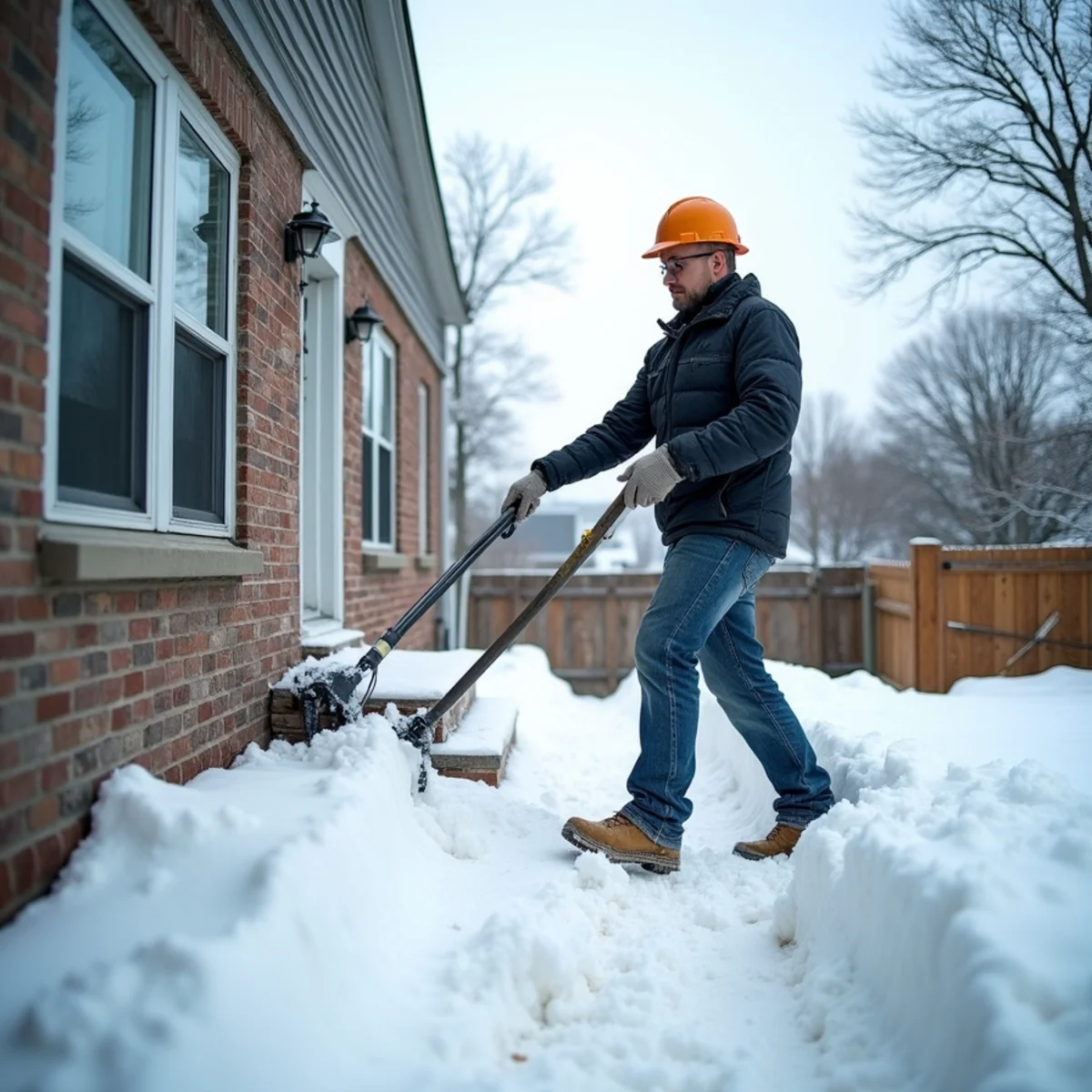
Using an extension roof rake from the ground to clear roof snow 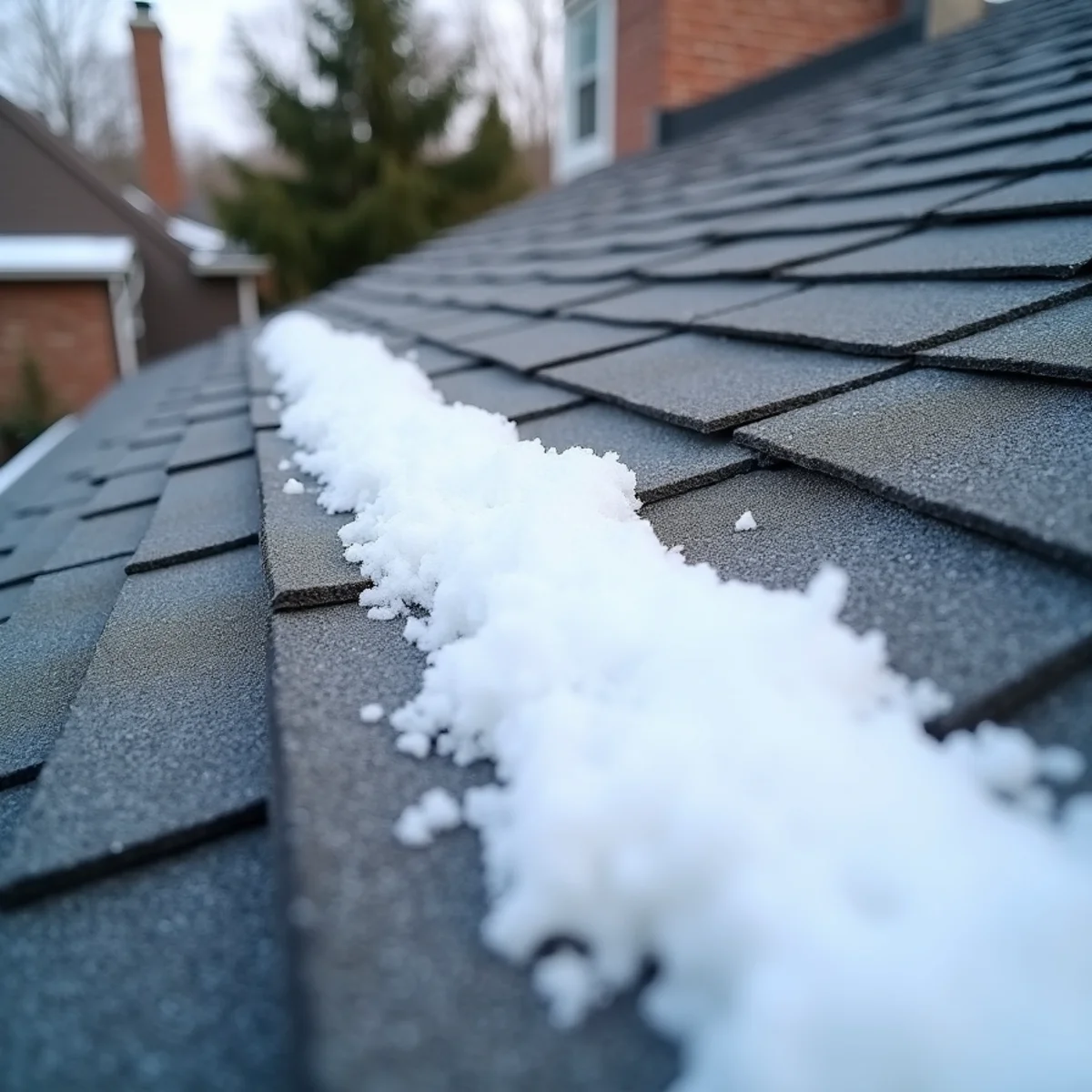
A thin snow cushion left on the shingles to protect the roof surface 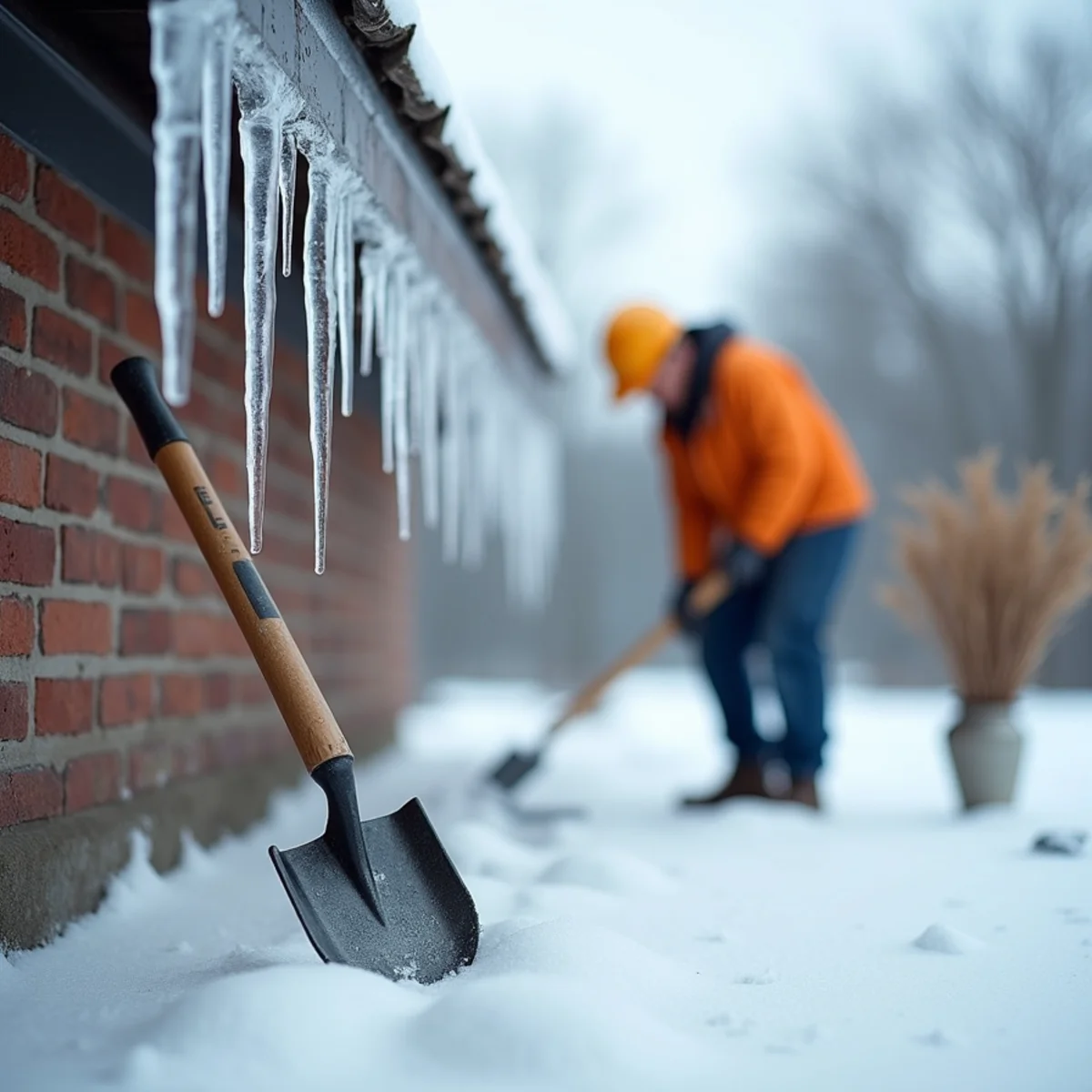
Metal tools left unused beside an ice dam to avoid puncturing the roof 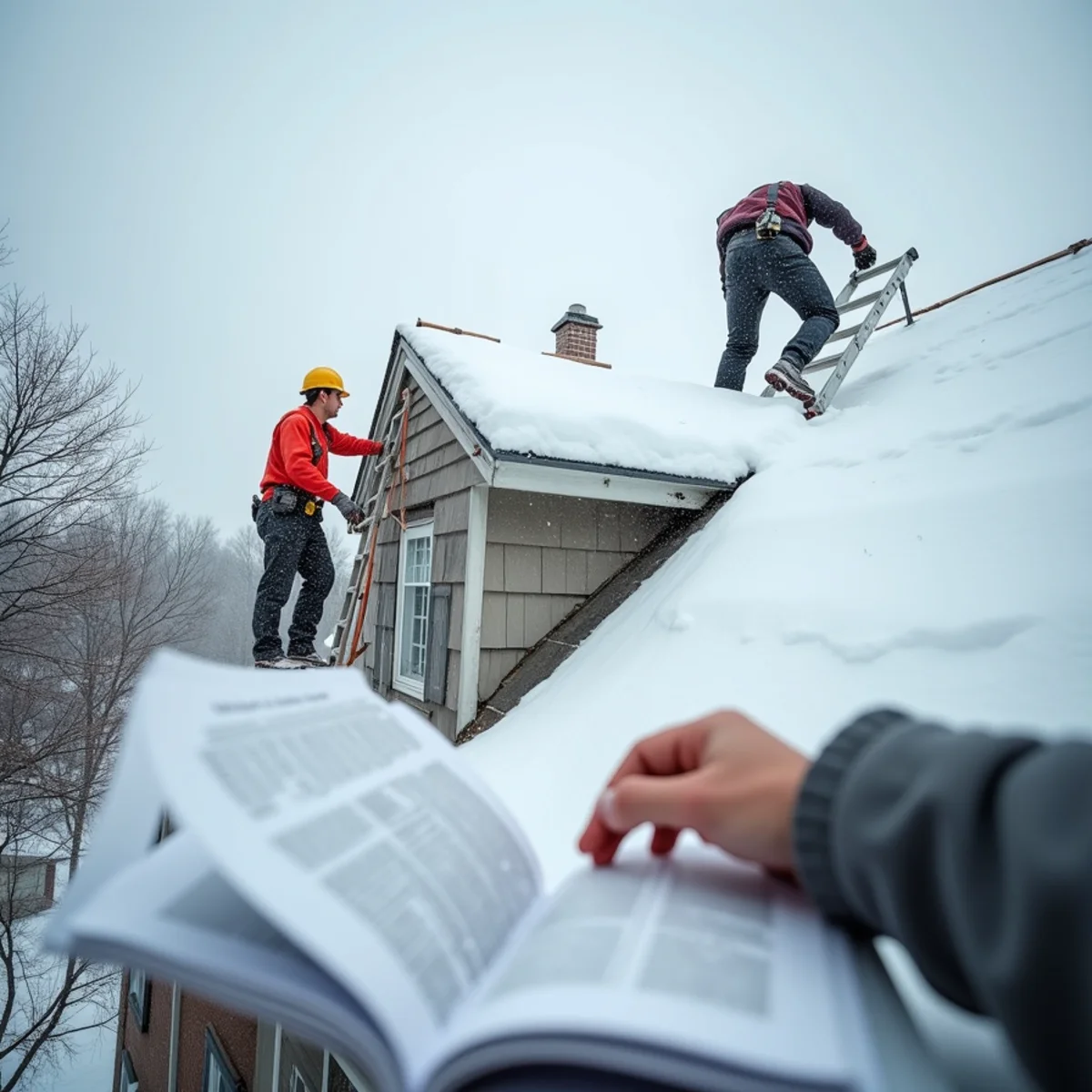
An untouched snow-covered roof with a ladder left at the eave 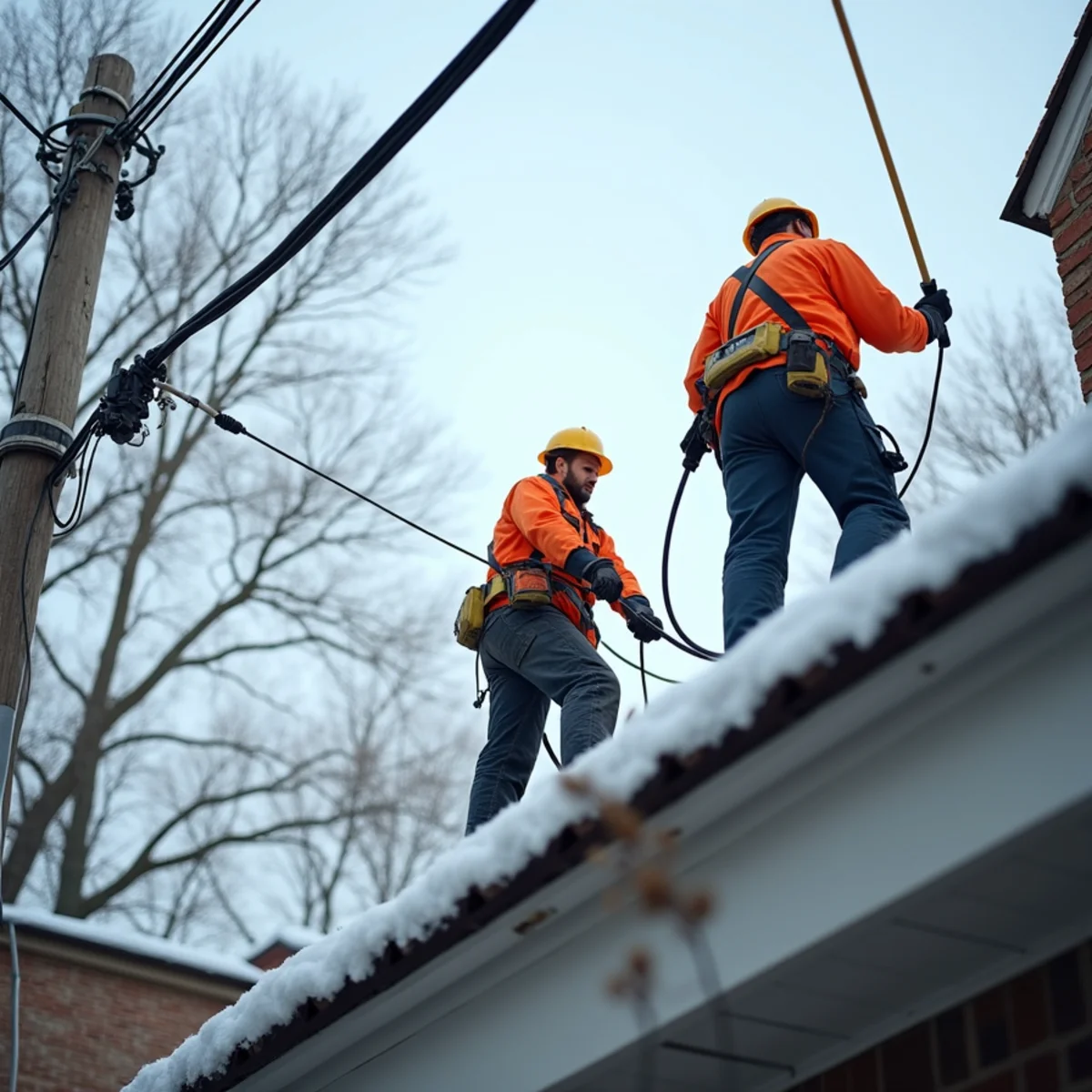
Keeping an extension pole clear of the overhead electrical service drop
Frequently asked questions
It is measured in pounds per square foot, not inches. The state code assigns a design ground snow load of 40 psf to Boston and most of the inner metro and lower North Shore, and 50 psf to Danvers, Ipswich, Gloucester, Topsfield, Reading and the northern towns. A code-built, well-maintained roof carries its design load without complaint. Age, added layers, rot and drifting are what change the math.
There is no honest inch figure, because weight depends on water content. Cold dry powder weighs a fraction of rain-soaked pack at the same depth, and a layer of ice weighs more still. Judge by what the snow has been through, not how deep it looks. If it has rained on the pack or the eaves have iced up, take the load seriously at any depth.
It is in Table R301.2(5) of the Massachusetts amendments to the residential code, which replaces the national snow map with a municipality-by-municipality list. The figures we cite were verified from the 780 CMR Eighth Edition table. The code has been updated since, so confirm the current value with your local building department before using it in a structural calculation.
There is no flat rate, and any contractor quoting one over the phone has not seen your roof. Price tracks roof size, height, staging and access, how much ice has formed, and whether the work is raking from the ground or steaming a dam off a third-floor eave. Steam work costs more than raking because it takes equipment and hours. We quote it per roof, in writing, before anyone starts.
Raking the lower three or four feet from the ground is reasonable for most homeowners. Climbing onto a snow-covered roof is not, and neither is chopping ice with a shovel or hatchet, which is how shingles and flashings get destroyed. If the load is heavy, the roof is steep, or the building is three stories, call someone with staging and steam equipment.