
Coastal Roofing on the North Shore: Salt Air, Stainless Fasteners and Wind Uplift
Within about 3,000 feet of saltwater, the roof you can see is rarely what fails first. Here is what corrodes, what FEMA guidance recommends, and the one metal combination that quietly ruins coastal roofs.
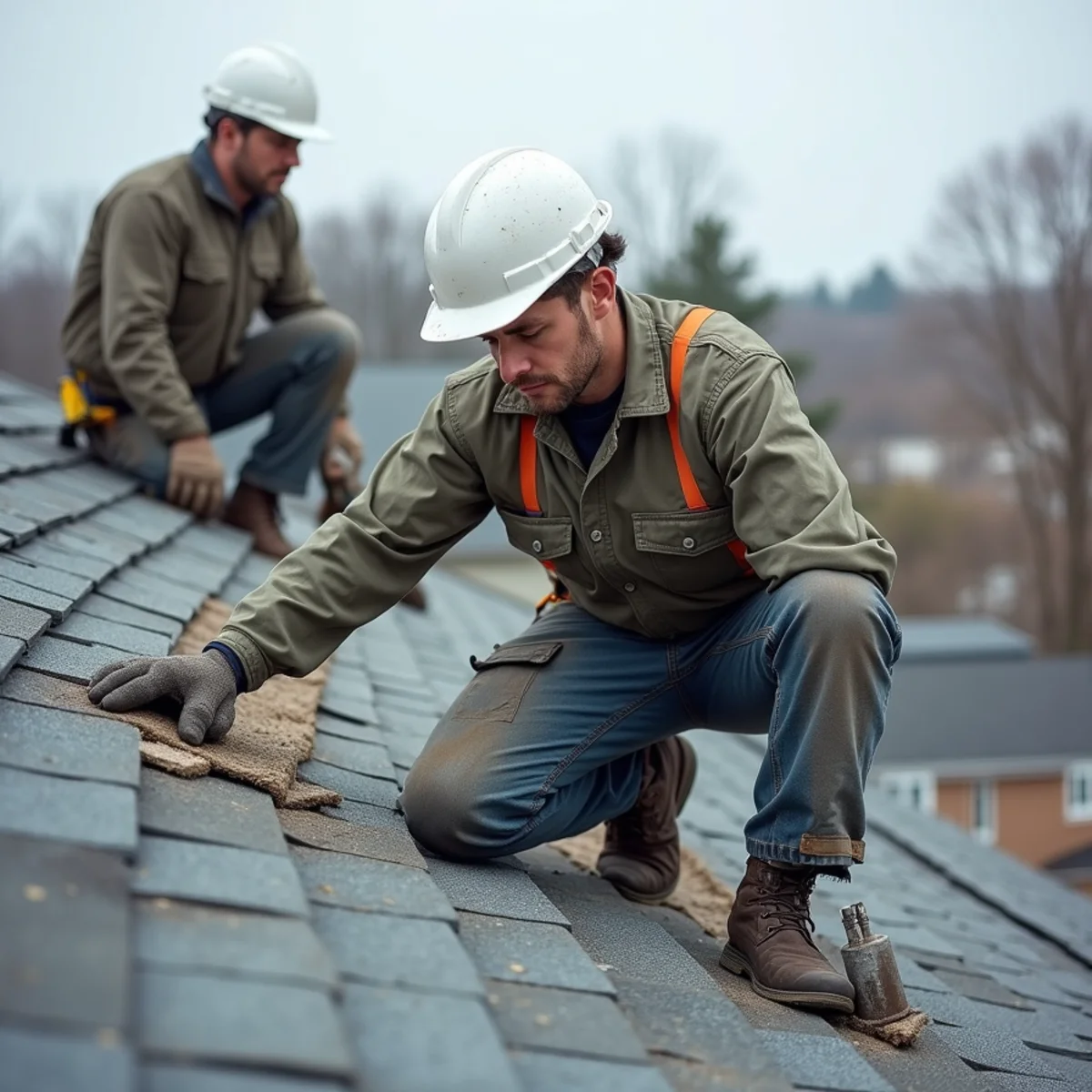
On a coastal North Shore roof, the shingles are usually not what failed. The fasteners underneath finished years earlier, and the roof came apart from the inside out.
That single fact drives every decision we make in Marblehead, Swampscott, Gloucester and along the Beverly and Ipswich shore. FEMA coastal construction guidance recommends 300-series stainless steel fasteners and connectors - both exposed and concealed - for structures within roughly 3,000 feet of a saltwater shoreline. Hot-dipped galvanized is the practical floor. Standard electro-galvanized nails have no business out there at all.
If you own within a few blocks of the water and your last roof was priced the same as one in Peabody, this article explains what you probably did not get.
What salt air actually does
Salt aerosol settles on every surface and does not wash off completely. It holds moisture against metal long after the rain stops, which keeps a corrosion cell running continuously rather than intermittently.
The visible symptom is rust bleeding down the face of the shingles from each nail head. The invisible one is worse: the shank of the fastener corroding inside the deck, losing section, and eventually letting go under uplift. You cannot see that from the ground and you cannot see it from the roof either. You find out in a nor'easter.
The same process attacks flashing, drip edge, gutter hangers, vent collars and every fastener holding them. Coastal roofs fail at their metal, not their field.
The mistake that quietly destroys good roofs
This is not a rare error. It happens when a crew brings the copper for the visible work and uses whatever is in the nail bag for the fastening. Copper wants copper nails. Stainless works with most things. Galvanized against copper is a decision to fail.
Wind, and why the perimeter matters most
Massachusetts code defines a Windborne Debris Region covering hurricane-prone areas within one mile of the coastal mean high-water line where the nominal design wind speed reaches 130 mph or greater, plus anywhere the design speed is 140 mph or greater.
Oceanfront North Shore properties - Marblehead Neck, Swampscott's Beach Bluff and Phillips Beach, Lynn Shore, Beverly Farms, Eastern Point in Gloucester, Ipswich's Great Neck - sit in the highest exposure category. That raises design uplift pressures on roof cladding and, critically, on edge metal.
Uplift does not start in the middle of a roof. It starts at the perimeter, gets under an edge, and peels. Which means:
- Heavy-gauge drip edge, properly fastened at close spacing, not the lightest stock that meets the letter of the spec.
- Starter courses done correctly at eaves and rakes, adhered and sealed, because that is the first thing wind tries to lift.
- Higher wind-rated shingles where asphalt is used, and hand-sealing where cold-weather installation means the self-seal strip has not activated.
- Ridge and hip caps fastened for uplift, not just laid on.
The Blizzard of 1978 produced sustained winds of 86 mph with gusts to 111 mph near Scituate and inundated Revere with seawater. That is the kind of event the perimeter detailing on your roof either survives or does not.
What we specify near the water
Cedar and slate
Copper nails, without exception. It is what the material expects, it is what the historic stock already has, and it will not set up a galvanic cell against copper flashing. On the Shingle Style and estate architecture at Eastern Point, Annisquam, Beverly Farms and Marblehead Neck this is simply the standard. Massachusetts code also removes any question about overlays - slate and wood shake must always be torn off rather than covered, which is why this work sits under slate roof repair and restoration.
Standing seam metal
On exposed elevations, standing seam metal roofing is often the right answer. Concealed clips, no exposed fasteners in the field, excellent snow shedding, and a long service life - provided the panel coating and every fastener and clip are specified for marine exposure rather than for an inland job.
Asphalt, when it is asphalt
Plenty of coastal North Shore houses are asphalt and should stay asphalt. The changes are the fastening, the edge metal, the wind rating, and running self-adhering membrane well past the code minimum. State code requires ice barrier from the roof edge to at least 24 inches inside the exterior wall line, and 36 inches along the slope on pitches of 8:12 or steeper - out here we treat that as a floor, because wind-driven rain gets under coverings in ways it never does inland.
Snow load, because it is not the same everywhere
Massachusetts assigns design ground snow load municipality by municipality, and the North Shore is not uniform. Marblehead, Swampscott, Lynn, Salem, Beverly and Peabody are listed at 40 psf. Gloucester, Ipswich, Danvers and Topsfield are listed at 50 psf - a quarter more design weight.
So a Gloucester roof has to answer heavy snow load and maximum wind uplift at the same time, which pull in different directions. It is why a spec that performs perfectly well in Salem can underperform on Cape Ann. Confirm current values with your local building official before relying on them for design.
Maintenance on a coastal roof
- Rinse where you reasonably can. Salt that gets washed off is salt that is not working on your metal.
- Inspect the perimeter every autumn - drip edge, rake edge, ridge cap, and any lifted starter course.
- Watch for rust bleed at nail heads. That is your early warning that the fastening was wrong.
- Check flashing at every transition. Chimneys, walls, skylights and valleys corrode before the field does. That is what flashing and chimney repair exists for.
- Get it looked at after every major storm, especially on a seasonal property nobody visits in winter.
The point
A coastal roof is not an inland roof with a better view. Same shingle, different fastener, different edge metal, different membrane coverage - and a meaningfully different price, honestly explained. Anyone quoting your Marblehead Neck house at Peabody pricing has not accounted for any of this.
Get a free roof estimate or call (209) 758-8550. We will tell you what is on your roof now and what it should be.
The points above, one at a time
A visual index of what each one actually looks like on a Massachusetts roof.
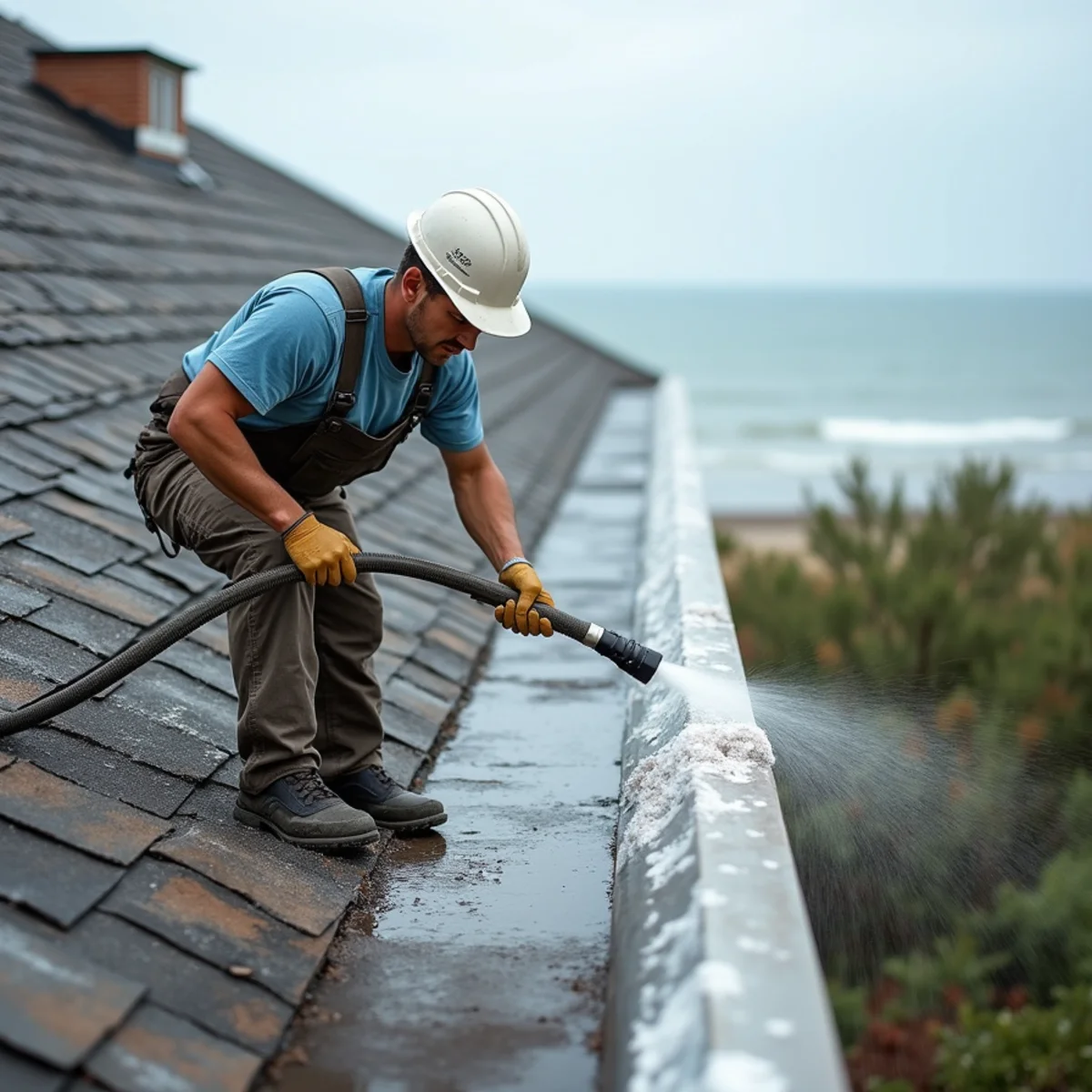
Rinsing salt residue from roof edge metal on a coastal Massachusetts home 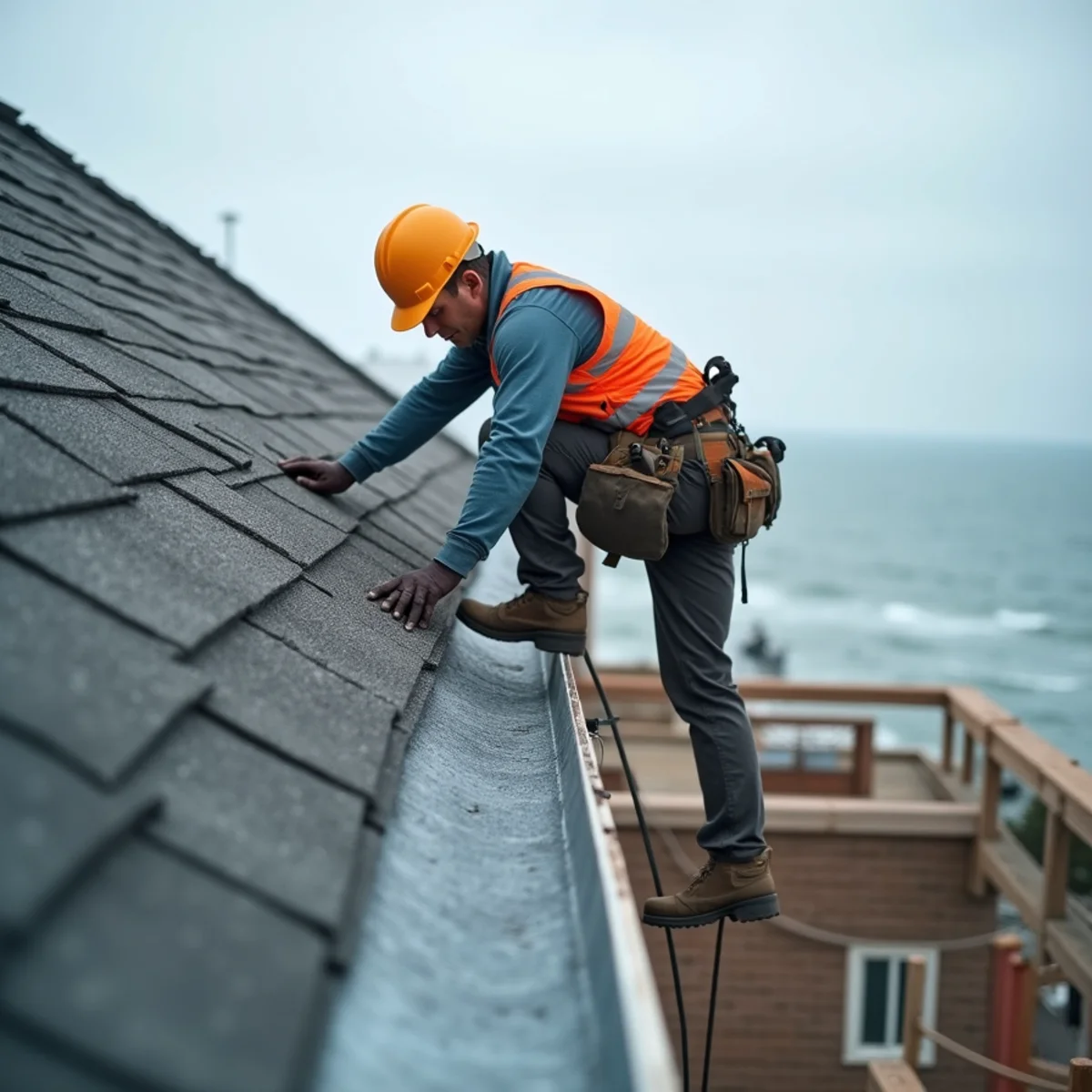
Checking drip edge and rake edge on an exposed coastal roofline 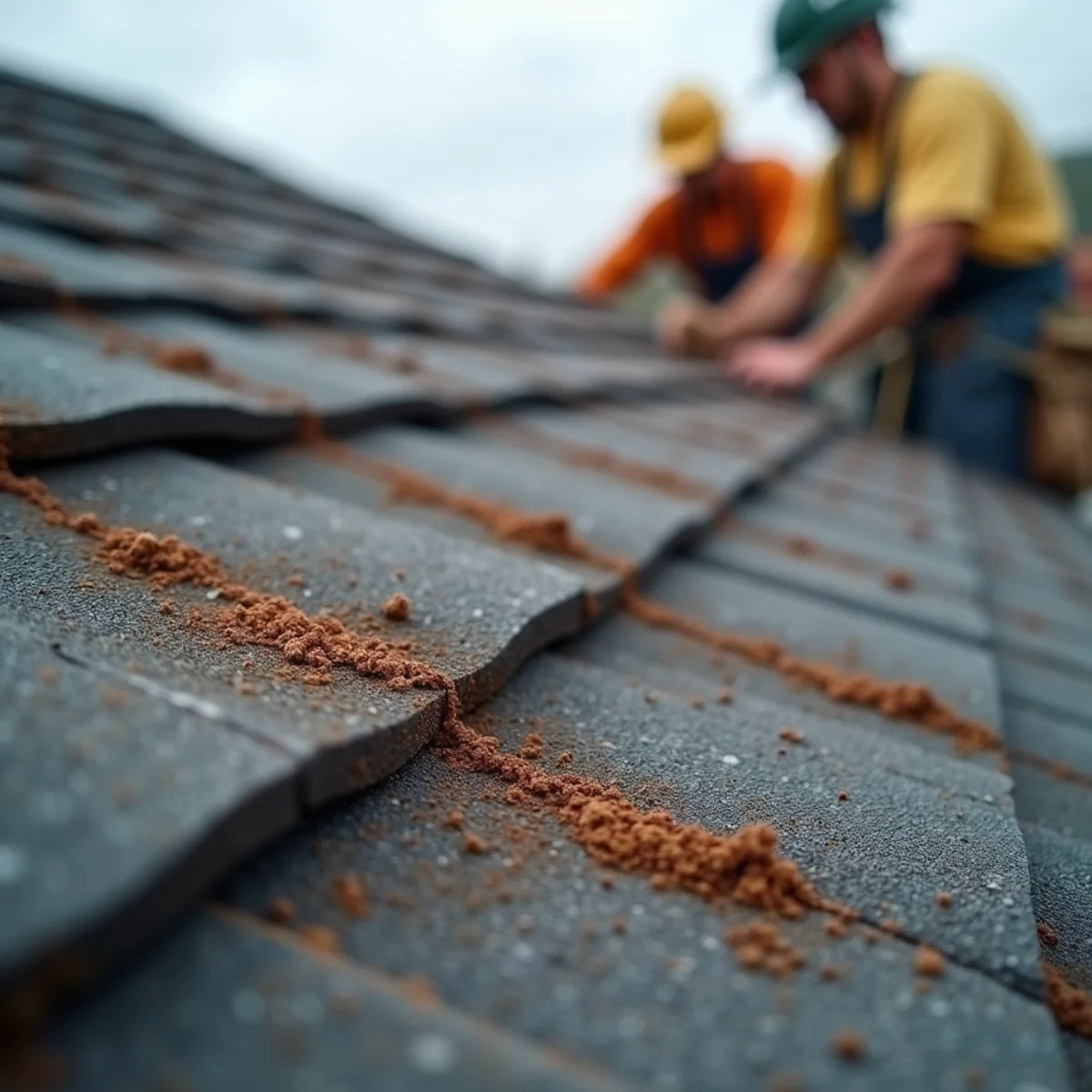
Rust bleeding from corroded nail heads on a coastal roof 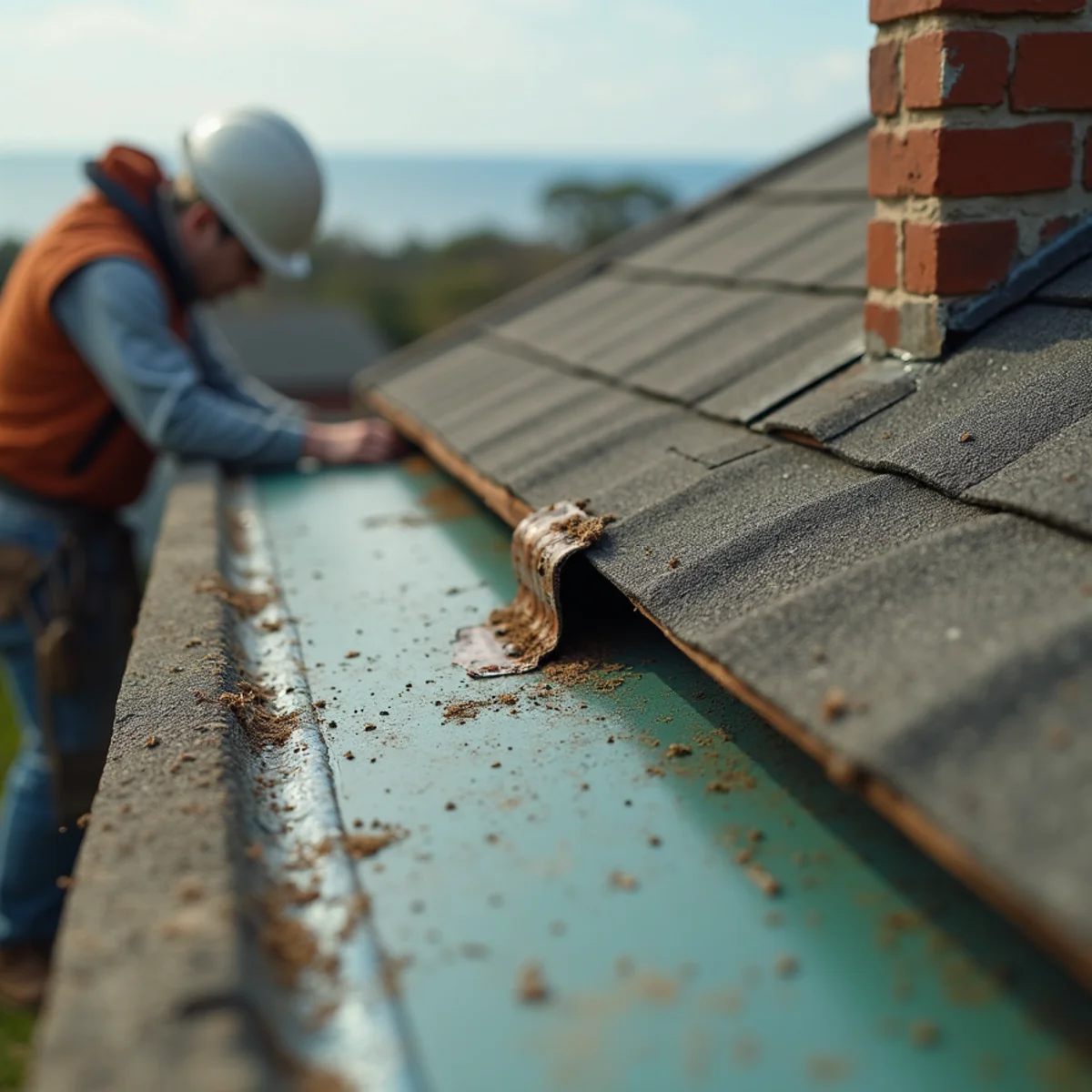
Salt-corroded flashing and galvanic staining at a coastal roof transition 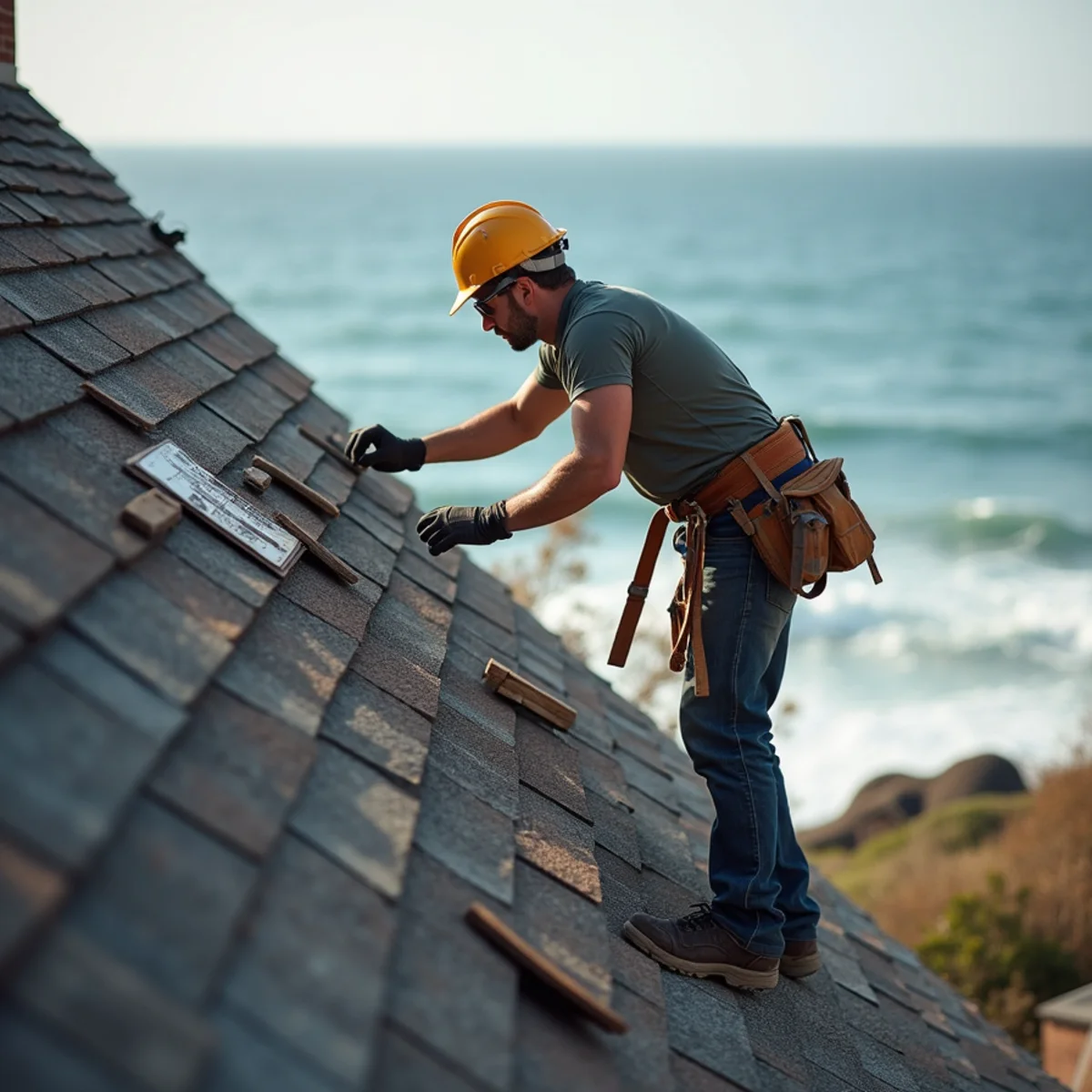
Post-storm roof inspection on an exposed North Shore coastal home
Frequently asked questions
Within roughly 3,000 feet of a saltwater shoreline, FEMA coastal guidance recommends 300-series stainless for fasteners and connectors, exposed and concealed both. Hot-dipped galvanized is the practical minimum. Standard electro-galvanized nails corrode, bleed rust through the shingle face, and lose section in the deck where you cannot see it.
You create a galvanic cell. In salt-laden moisture the less noble metal corrodes rapidly, and it happens at the fasteners, concealed behind the finished surface. The roof looks fine right up until it leaks. Copper wants copper nails; stainless is compatible with most assemblies.
Often, yes - standing seam has concealed clips and no exposed fasteners in the field, sheds snow well, and lasts a long time. But it only works if the panel coating, clips and fasteners are specified for marine exposure. A standard inland metal spec near open water is not an upgrade.
Almost always fastening and edge metal. Salt keeps a corrosion cell running continuously, and wind uplift attacks the perimeter first. Two roofs with identical shingles can have very different service lives purely on what is holding them down and how the edges were detailed.
No. Marblehead, Swampscott, Lynn, Salem, Beverly and Peabody are listed at 40 psf, while Gloucester, Ipswich and Danvers are listed at 50 psf - a quarter more. Gloucester and Ipswich roofs have to handle the higher snow load and the highest wind exposure simultaneously.