
Roof Replacement Cost in Boston, MA (2026 Price Guide by Material and Home Size)
Real 2026 price ranges for a Boston roof replacement, broken down by material and by home size, plus the local code, permit and access costs that national calculators never account for.
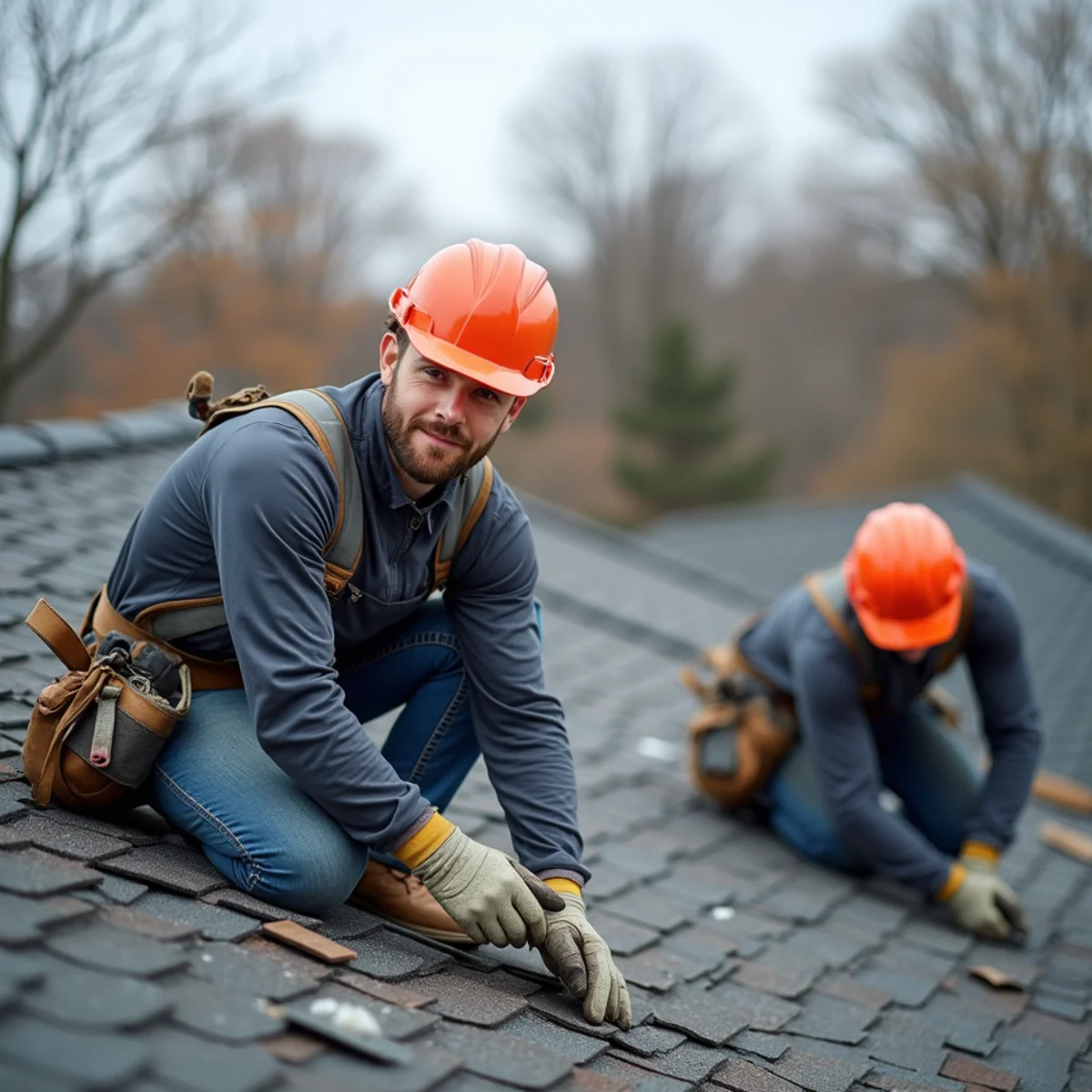
Your roof is leaking, or a neighbor just had a crew out, or an adjuster sent you a letter. Either way you need a number before you can decide anything. Here it is, straight.
In 2026, most single-family homeowners pay $12,000 to $28,000 for a roof replacement in Boston in architectural asphalt - roughly $6 to $12 per square foot of roof surface. A triple-decker with a pitched front and a flat rear deck usually runs $18,000 to $40,000. Slate and copper start around $30,000 and climb from there.
Those are market ranges, not quotes. Nobody prices your house from a keyboard. But the spread is not random. It tracks a short list of things any roofer who has walked your roof can point at, and most of that list is unique to Massachusetts.
Roof Replacement Cost by Material
Material is the biggest lever on the final number. These are installed Boston-market ranges with tear-off and disposal included.
- Architectural asphalt - $6 to $12 per square foot. The default on post-war capes, ranches and splits across West Roxbury, Quincy and Saugus, and what most asphalt shingle roofing jobs use.
- EPDM, TPO or PVC membrane - $9 to $16 per square foot. A single rubber or plastic sheet for rear decks, mansard tops and small commercial. Price swings on insulation and on how many drains, curbs and parapets are in the way, which is why flat roof replacement in Boston prices separately.
- Standing seam or flat-lock metal - $18 to $32 per square foot. Panels are fabricated to your roof, so metal roofing prices by complexity more than by area.
- Natural slate - $25 to $50 per square foot installed new. On a Back Bay mansard or a South End bowfront, targeted slate roof repair is usually the cheaper honest answer.
Every range is per square foot of roof, not of house. Roofers measure in squares, and one square is 100 square feet of roof surface. Your estimate should state the square count.
What It Costs to Roof a 2,000 Square Foot House
This version of the question has a trap in it. Living area is not roof area.
A 2,000 square foot two-story colonial sits on a 1,000 square foot footprint. Add pitch and overhangs and the roof is 1,300 to 1,600 square feet - 13 to 16 squares, or roughly $10,000 to $19,000 in asphalt.
A 2,000 square foot ranch is the opposite. The whole floor plan is under the roof, so you are buying 22 to 26 squares and looking at $15,000 to $28,000 for the same shingle. Same house size, very different roof.
Why Roofing Costs More Here Than the National Average
Access, staging and nowhere for the dumpster
A ranch in Middleton is a ladder job. A three-decker in Dorchester is three to four stories of staging, rear porch stacks blocking the ladder line, and party walls with no side setback. Beacon Hill adds steep one-way brick streets and no dumpster space. Dense-city labor runs well above the suburban rate.
The ice barrier is code, and it is not free
780 CMR R905.1.2 requires an ice barrier under asphalt, metal shingles, slate and wood shakes: two cemented layers of underlayment or a self-adhering polymer-modified bitumen sheet, commonly called ice and water shield. It runs from the lowest roof edge to at least 24 inches inside the exterior wall line, and at least 36 inches along the slope on pitches of 8:12 or steeper. When a bid comes in thousands low, check this line first.
Some roofs cannot legally be overlaid
Massachusetts reroofing rules require full removal of slate, clay tile, cement tile, wood shake and asbestos-cement tile. No overlay, ever. Many post-war capes already carry a 1990s overlay, which forces a tear-off and doubles disposal weight. The story-and-a-half Cape is also the region's biggest ice-dam generator, so venting belongs in the same scope.
Old sheathing and the weather that eats it
Boston averages 49.2 inches of snow a year, but the damage is not really about snowfall. The city spends about 92 days at or below 32 degrees and only about 23 frozen all day. That 69-day gap is freeze-thaw, and it pulls apart flashing, chimney crowns and slate. The winter of 2014-15 dropped 110.6 inches at Logan. Houses built before the 1930s were sheathed with boards, not plywood, and eave rot stays hidden until tear-off.
Design snow load changes at the town line
Massachusetts assigns design ground snow load by municipality. Boston, Cambridge, Somerville, Brookline, Newton and Quincy sit at 40 psf; Danvers, Ipswich, Gloucester and Reading sit at 50 psf. It rarely moves the shingle price, but it decides whether a sagging rafter gets sistered or the deck gets reframed - the difference between a $20,000 job and a $30,000 one. Values come from the 780 CMR Eighth Edition table; confirm yours with the local building official.
Salt air on the coast
Within roughly 3,000 feet of saltwater, FEMA coastal guidance calls for 300-series stainless fasteners. Hot-dipped galvanized is the practical minimum, and copper nails are standard for cedar and slate. Mixing copper flashing with galvanized fasteners causes galvanic corrosion. Stainless costs more in Marblehead or Swampscott, and it is cheaper across twenty years.
Permits, Historic Review and the Forgotten Line Items
Boston is cheaper on permits than the national cost articles claim. A reroof with no structural work goes through an Inspectional Services short-form permit: $20 application plus $10 per $1,000 of the work estimate. On a $20,000 roof that is $220. Your contractor pulls it and files:
- Trade license, front and back
- Certificate of liability insurance
- Massachusetts Workers' Compensation Affidavit
- The signed homeowner contract
- Site Safety Plan Affidavit
- Mattocks-Higgins Affidavit of Workplace Safety
In one of the city's local historic or conservation districts - Back Bay, Beacon Hill, the South End, Bay Village, Fort Point Channel, Highland Park, Mission Hill Triangle, Saint Botolph, Aberdeen or Bay State Road - Boston Landmarks Commission approval comes first, and ISD will not issue the permit without it. Beacon Hill has been a local district since 1955, the first in Massachusetts. Budget extra weeks and expect the approved material, not the cheapest one.
Reading Three Estimates Without Getting Burned
Price by itself tells you almost nothing. These four checks do.
- Verify the HIC registration yourself. Home Improvement Contractor registration is required on owner-occupied one-to-four unit homes, and the state lookup is free. If the contractor is not registered, the Guaranty Fund and its $10,000 per-project ceiling are closed to you.
- Ask who holds the Construction Supervisor License. The CSL is the license of record on the permit; the HIC is the consumer registration. There is a Specialty CSL for Roof Covering covering up to 25 percent of sheathing and sistering rafters. A legitimate Massachusetts roofer carries both.
- Walk away from anyone offering to cover, waive or absorb your deductible. That is illegal in Massachusetts and the clearest red flag in this trade. A contractor who commits insurance fraud in your driveway will cut corners on your eaves.
- Get the scope in writing. Ice barrier coverage, underlayment, flashing metal, drip edge, ridge vent, sheathing unit price, cleanup and warranty. Home improvement statute violations are per se Chapter 93A violations, exposing a contractor to treble damages and attorney's fees.
Get a Real Number for Your Roof
The range orients you. Only the roof gives you the price. Paulo Silva walks the roofs and writes the estimates himself across Boston and the surrounding towns, so you get a square count, a material spec, a sheathing unit price and a permit line on paper before anything is torn off.
We are licensed and insured in Massachusetts, and HIC and CSL credentials come with every estimate. Call (209) 758-8550 or get a free roof estimate, and we will tell you what your roof actually needs - including the times the honest answer is a repair, not a replacement.
Frequently asked questions
Most single-family asphalt shingle replacements in the Boston area run $12,000 to $28,000 in 2026. Triple-deckers and small multi-families typically land between $18,000 and $40,000 because of staging and the mix of pitched and low-slope surfaces. Slate, copper and standing seam metal start around $30,000 and rise with complexity. Every one of those is a market range, not a quote for your house.
Figure $6 to $12 per square foot for architectural asphalt, $9 to $16 for EPDM, TPO or PVC membrane, $18 to $32 for metal, and $25 to $50 for natural slate. Those are per square foot of roof surface, not living area. Roofers price in squares, where one square equals 100 square feet of roof, and your estimate should list the square count.
Three things stack up. Access is harder, since a three-decker means three to four stories of staging and downtown streets often have no dumpster space. Code adds material, because 780 CMR R905.1.2 requires an ice barrier at least 24 inches inside the exterior wall line and 36 inches along the slope on pitches of 8:12 or steeper. And the housing stock is old, so board sheathing and hidden rot show up on jobs that looked simple from the ground.
Yes. A reroof with no structural work goes through an Inspectional Services short-form permit, and the fee is $20 plus $10 for every $1,000 of the work estimate. Your contractor pulls it and files the trade license, insurance certificate, Workers' Compensation Affidavit, the signed contract and the safety affidavits. In a local historic district, Boston Landmarks Commission approval must be secured before ISD will issue the permit.
Sometimes, but far less often than people hope. Massachusetts reroofing rules require full removal for slate, clay tile, cement tile, wood shake and asbestos-cement tile. Many post-war capes and ranches already carry one overlay, which rules out another. An overlay also hides rotted sheathing, so the savings disappear the first winter a deck gives way at an eave.