
Do You Need a Permit to Replace a Roof in Boston? The ISD Short-Form Permit Explained
Boston requires a permit for a reroof, and the fee formula is public. Here is exactly what the Short-Form Permit costs, which six documents your contractor has to file, and why a roofer who wants to skip it is telling you something.
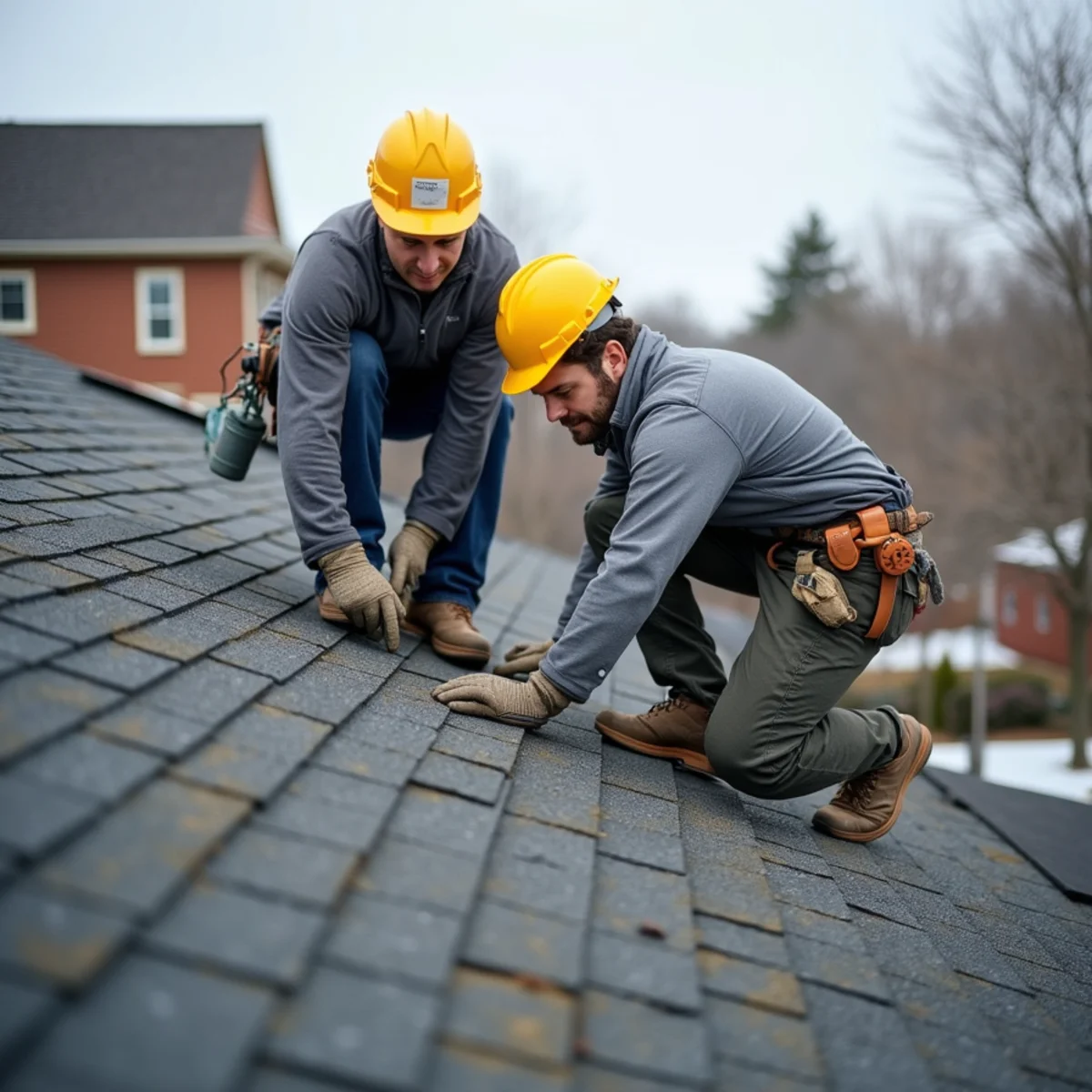
Yes. If you are replacing a roof in the City of Boston, the work needs a permit from Inspectional Services. For a normal residential reroof with no structural change, that is a Short-Form Permit, and the fee is public and simple: $20 to apply, plus $10 for every $1,000 of the work estimate.
On a $14,000 roof that is $20 plus $140, so $160. It is not the expensive part of your project, and it is not the part worth arguing about.
The reason this article exists is that almost nobody in the Boston roofing market publishes it. We checked six competitor sites while planning this one, and not a single page explained the permit path, the fee, or the paperwork. So homeowners end up taking a contractor's word for whether a permit is needed - which is exactly backwards, because a roofer who does not want to pull a permit usually has a reason.
Short-Form or Long-Form: which one applies to you
Boston ISD issues Short-Form Permits for minor alterations, repairs, and replacements that do not change the structure or the use of the building. A tear-off and reroof, replacing gutters, replacing a skylight in an existing opening - all Short-Form work.
Long-Form Permits are for new construction and for structural or use changes. You cross into that territory if the job involves altering the roof framing, adding a dormer, cutting a new opening, or building a roof deck. If you are having a straight roof replacement in Boston done, you are almost certainly in Short-Form territory.
The six documents your contractor has to file
This is the part worth knowing, because it is where unlicensed and uninsured operators fall down. To pull a Short-Form Permit in Boston, a contractor must submit:
- A valid trade license - front and back.
- A Certificate of Liability Insurance.
- The Massachusetts Workers' Compensation Affidavit.
- A signed contract with the homeowner - so the city sees the scope and the price you actually agreed to.
- A Site Safety Plan Affidavit.
- The Mattocks-Higgins Affidavit of Workplace Safety.
Read that list again and notice what it forces into the open. A contractor without workers' compensation coverage cannot file it. A contractor without liability insurance cannot file it. A contractor who has not given you a signed written contract cannot file it.
Can I pull the permit myself?
If you are an owner-occupant of a one- or two-family home, yes. You file a Homeowner Waiver, a Workers' Compensation Affidavit, a detailed description of the work, and a project cost estimate.
We would rather you did not, and not because we want the control. When a homeowner pulls the permit, the homeowner becomes the responsible party in the city's eyes. You take on the safety and compliance exposure that would otherwise sit with the licensed contractor. Some roofers push homeowners to pull their own permits for exactly that reason. That is a warning sign, not a convenience.
Historic districts: approval comes before the permit
If your property sits in one of Boston's local historic districts or architectural conservation districts, there is a step before the permit. Boston is explicit that Landmarks Commission approval must be obtained before Inspectional Services will issue the permit.
The districts administered through the Boston Landmarks Commission include the Historic Beacon Hill District, the Back Bay Architectural District, the South End Landmark District, Bay Village, Fort Point Channel, Aberdeen ACD, Bay State Road/Back Bay West ACD, Highland Park ACD, Mission Hill Triangle ACD and Saint Botolph Area ACD.
In practice, that means material, colour and profile on a visible roof become design-review decisions. Slate, standing seam, mansard faces, cornices and skylights are all in scope. We cover the process in detail in our guide to Landmarks Commission roof approval in Beacon Hill, Back Bay and the South End. If you own in Beacon Hill or Back Bay, budget the calendar time, not just the money.
What the permit is actually protecting you from
An inspected roof means somebody other than the person taking your money looked at the work. That matters most on the things you will never see again once the shingles go down, and it applies just as much to a flat or low-slope roof replacement or a commercial roofing job as it does to a pitched residential roof.
- The ice barrier. Massachusetts requires self-adhering membrane from the lowest roof edge to at least 24 inches inside the exterior wall line, and at least 36 inches measured along the slope on pitches of 8:12 or steeper. On a steep triple-decker that is two or three courses, not one. Full detail in our ice and water shield code guide.
- Layer limits. Massachusetts caps asphalt at two layers, and slate, clay tile, cement tile, wood shake and asbestos-cement tile must always be torn off rather than overlaid.
- Decking condition. An overlay hides rotted sheathing. A permitted tear-off means somebody saw the deck.
There is also the resale question. Unpermitted work shows up during a sale, and an appraiser or a buyer's attorney finding an uninspected roof is a problem you get to solve on somebody else's timeline.
Outside Boston, the path changes
The $20-plus-$10-per-$1,000 formula is a City of Boston figure. It does not apply in Cambridge, Somerville, Salem or anywhere else - each municipality runs its own building department with its own fee schedule.
What does apply statewide is licensing. Massachusetts requires a Home Improvement Contractor registration for residential contracting on existing owner-occupied one-to-four unit homes, and a Construction Supervisor License as the license of record on the permit itself. A legitimate roofer carries both, and you can verify the HIC free through the state's public lookup. We wrote a whole guide on CSL versus HIC and how to verify them.
The short version
Yes, you need a permit. It costs $20 plus $10 per $1,000 of work in Boston. Your contractor should pull it, file the six documents, and hand you the closed-out paperwork at the end. If any part of that produces hesitation, you have learned something useful about the bid in front of you.
We pull the permit on every job we do in the city - Dorchester, South Boston, Charlestown, the whole map. Want a written itemized estimate with the permit line already in it? Get a free roof estimate or call (209) 758-8550.
Frequently asked questions
A Short-Form Permit costs $20 to apply plus $10 for every $1,000 of the work estimate, payable up front, online or in person. On a $14,000 reroof that works out to $160 total.
Minor repairs generally fall under the same Short-Form category as replacements, but the practical threshold varies with scope. The safe approach is to ask your contractor to confirm with Inspectional Services rather than assume. A patch of a few shingles is different from re-flashing a chimney and re-decking a section.
The usual moment it surfaces is a sale, when a buyer's attorney or appraiser asks for the permit history. Depending on the situation, the city may require an inspection or a retroactive filing. It is far cheaper to permit the work the first time than to unwind it later.
You are. Filing a Homeowner Waiver moves the safety and compliance responsibility onto you rather than the licensed contractor. Roofers who push homeowners to pull their own permits are usually shifting exposure they should be carrying themselves.