
EPDM vs. TPO vs. PVC: Choosing the Right Flat Roof for a Boston Triple-Decker
Most of Boston's housing has a flat or near-flat deck, which makes membrane choice a real decision. Here is how EPDM, TPO and PVC actually differ — and why the tapered insulation under them matters more than the sheet itself.
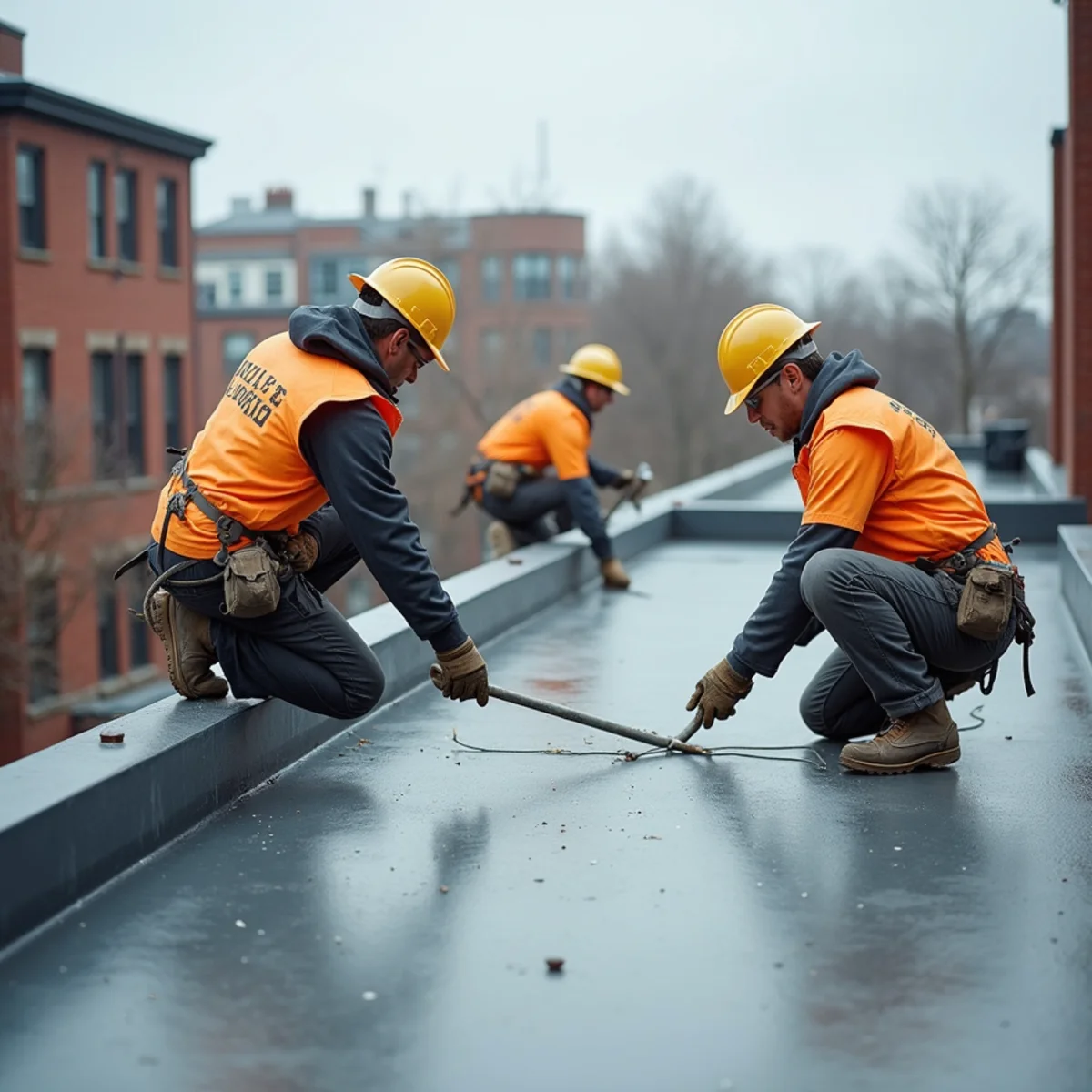
Short answer: EPDM is the default for a residential triple-decker deck - cheapest to install, easiest to repair, proven in this climate. TPO is the value pick when you want a reflective white surface. PVC is the one to specify when there is grease, chemical exposure, or a restaurant kitchen below.
That covers most decisions. But the honest version is that on a Boston flat roof, the membrane is not usually what fails. Drainage is. A perfect sheet over a deck that ponds will still be a problem in ten years, and a modest sheet over a properly tapered, properly drained assembly will outlive it.
So read the material comparison, then read the drainage section. The second one is worth more money to you.
Why this decision comes up so often in Boston
The dominant housing form here is not the pitched suburban gable. It is the triple-decker, which matured around 1890 in Dorchester as the streetcar network expanded, and the brick rowhouse.
Both put a flat or near-flat deck at the top. A hipped triple-decker typically has a narrow pitched face toward the street and a flat central deck behind it - a membrane roof wearing a shingle hat. Rowhouses in the South End and Back Bay are flat behind the mansard face, with parapets on both party walls.
So in Dorchester, South Boston, Somerville, Chelsea and Everett, single-ply membrane is not a niche commercial product. It is the normal residential roof. That is what flat and low-slope roof replacement means around here.
EPDM: the workhorse
EPDM is a synthetic rubber sheet, usually black, occasionally white. It has been on New England roofs for decades, which means we know how it ages here rather than guessing.
- Strengths: lowest installed cost of the three, excellent flexibility in cold, handles freeze-thaw movement well, and it is genuinely easy to repair. A patch on EPDM is a straightforward job years later.
- Weaknesses: black absorbs heat, which is not always bad in a heating-dominated climate but does no favours in August. Seams are adhesive- or tape-based rather than welded, so seam quality depends heavily on the installer.
- Best for: most residential triple-decker and rowhouse decks, and anywhere ease of future repair matters more than reflectivity.
TPO: reflective and hot-air welded
TPO is a thermoplastic sheet, typically white, with hot-air welded seams. A properly welded seam is a fused joint rather than a bonded one, and that is a real advantage.
- Strengths: reflective white surface reduces summer heat gain, welded seams are strong, and pricing sits close to EPDM.
- Weaknesses: the formulation has changed over the years, so long-term field history is shorter than EPDM's. Weld quality is everything, which makes installer skill non-negotiable.
- Best for: buildings where summer cooling load matters, larger residential and small commercial decks, and anywhere a reflective surface is wanted.
PVC: when there is grease or chemistry involved
PVC is also thermoplastic and hot-air welded, but its chemical resistance is what distinguishes it.
- Strengths: stands up to grease, oils and chemical exposure, welded seams, and a long track record on commercial buildings.
- Weaknesses: highest installed cost of the three, and it is not always compatible with asphalt-based products it may sit against, so detailing matters.
- Best for: restaurants and food service, buildings with kitchen exhaust, and mixed-use properties where a commercial tenant sits under a residential roof. That is a very common situation in Boston, and it is the sort of thing we look at on commercial roofing jobs.
Ponding water and tapered insulation
A flat roof is never truly flat. It is built with a deliberate slope toward drains or scuppers so water leaves. When that slope is missing, insufficient, or has been lost through deck deflection, water sits.
Standing water does several bad things at once. It concentrates dirt and biological growth, it accelerates UV and thermal degradation, it adds real weight, and in this climate it freezes. A pond that freezes and thaws through roughly 69 freeze-thaw days a year works relentlessly on seams and flashings.
The fix is a tapered insulation system - rigid insulation cut in a slope so it builds fall toward the drainage points, giving you thermal performance and drainage from one assembly. It costs more up front than laying flat board and it is the difference between a roof that lasts and one that does not.
The details that actually leak
On flat roofs the field almost never fails first. These do:
- Drains and scuppers. Blocked, undersized, or set above the low point of the deck. Clear them twice a year.
- Parapet coping. A failed cap lets water into the top of the wall, and it runs down inside the assembly where nothing can stop it.
- Penetrations. HVAC curbs, vent stacks, antenna masts, pitch pockets. Every one is a hole in an otherwise continuous membrane.
- The transition to a pitched face. On a hipped triple-decker, where the membrane deck meets the shingle slope is a genuine two-system junction and a classic failure point.
- Terminations at a wall. Membrane has to be mechanically terminated and counterflashed, not just adhered and hoped for.
Most of the flat-roof calls we get turn out to be one of those five rather than the sheet itself, which is why a lot of them end in roof repair rather than replacement. Our article on why roofs leak only in heavy rain covers the diagnostic side.
Lifespan and what actually drives it
All three membranes are capable of long service lives when installed over a properly drained assembly and maintained. What shortens them, in order: standing water, poor seam or weld workmanship, foot traffic from other trades, and neglected drains.
Notice that three of those four are not about the material at all. Choose the sheet that suits the building, then spend your attention on the assembly beneath it and the details around the edges. For how membranes compare against pitched materials over time, see our guide on how long a roof lasts in New England.
Getting a comparable bid
Ask every bidder for the membrane type and thickness, the insulation type and whether it is tapered, how the drains and scuppers are being handled, how penetrations and terminations are detailed, and what the workmanship warranty covers. Two numbers that look far apart usually differ on exactly those lines.
We spell all of it out. Get a free roof estimate or call (209) 758-8550 and we will walk the deck before quoting.
The points above, one at a time
A visual index of what each one actually looks like on a Massachusetts roof.
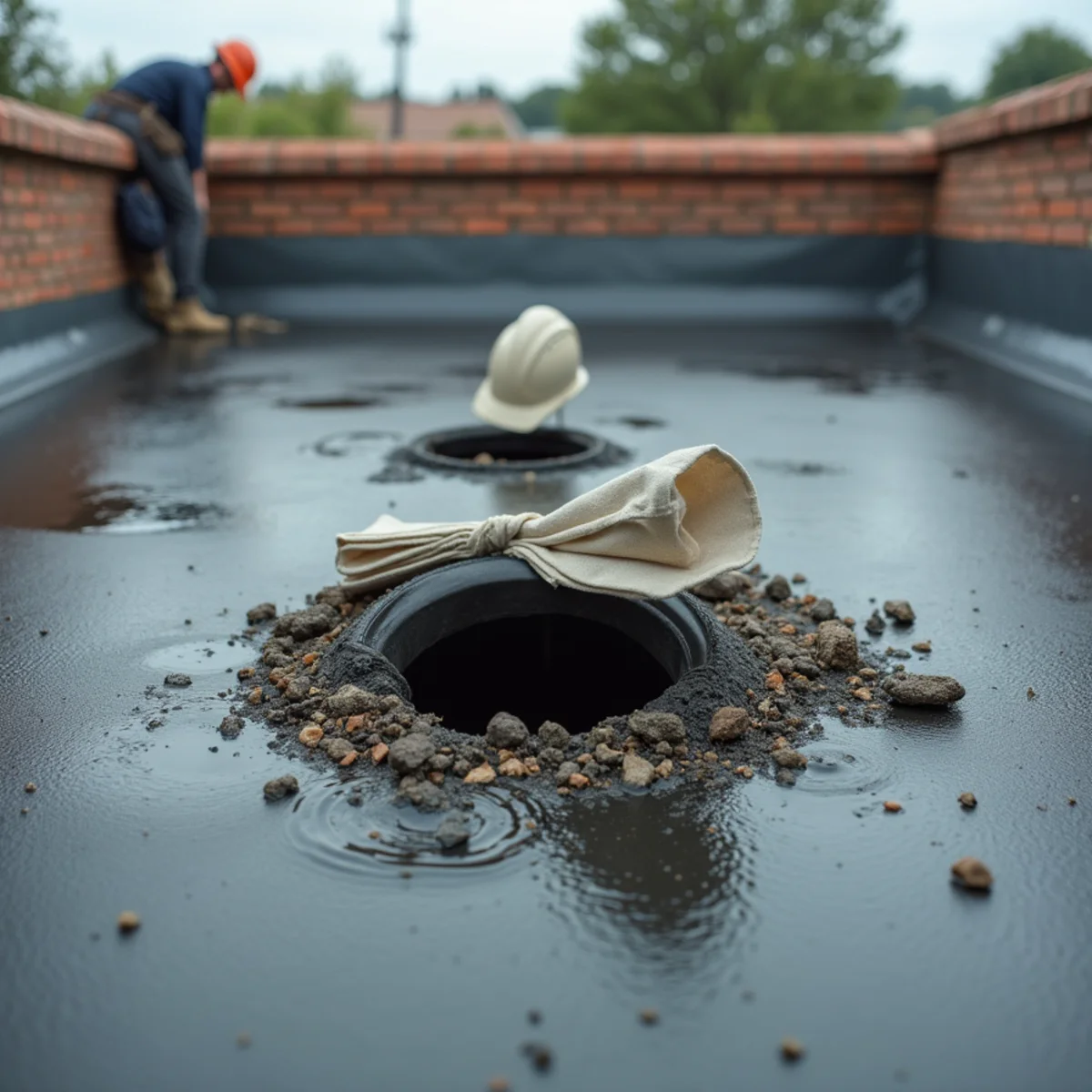
Blocked drain and scupper backing water up on a flat roof 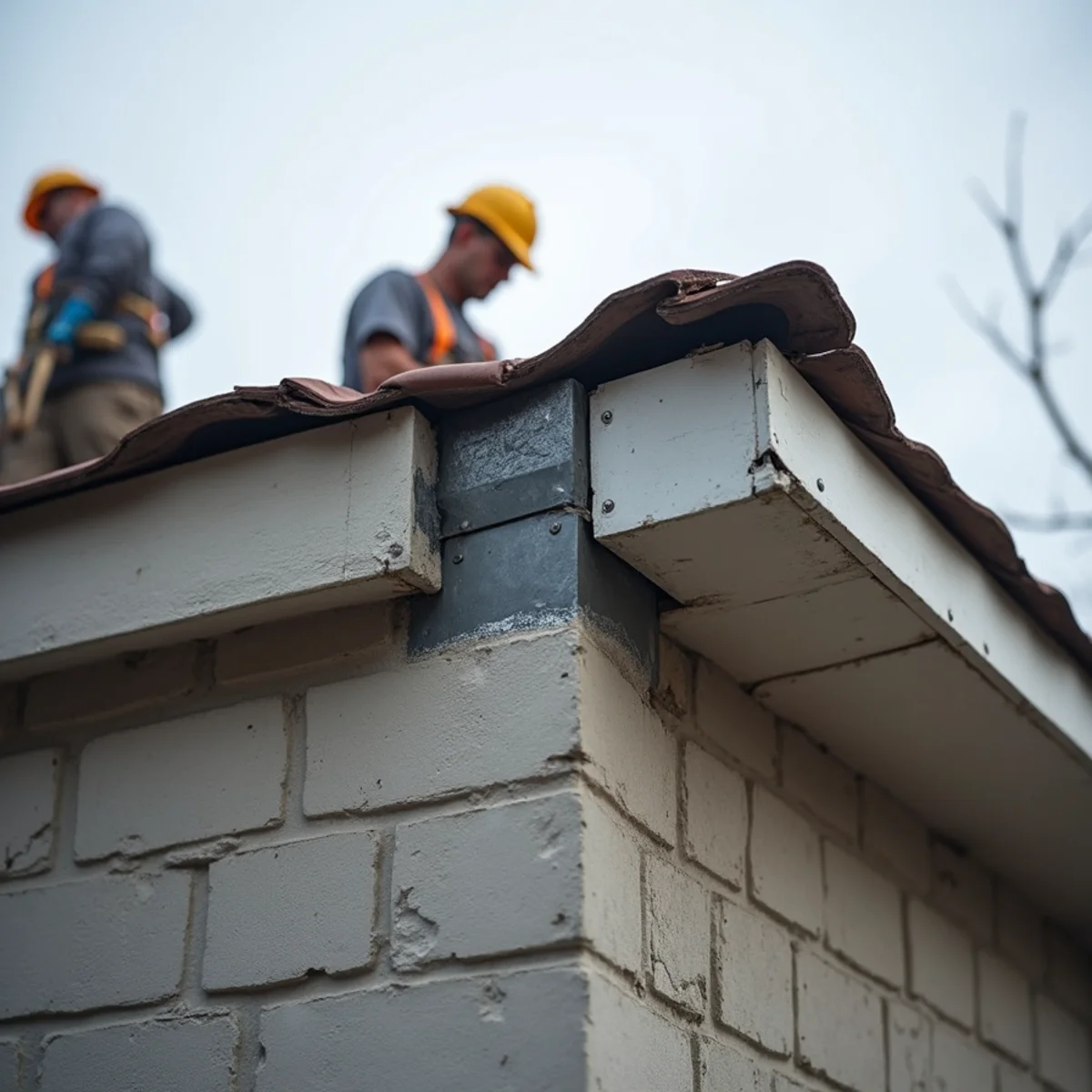
Split parapet coping letting water into the wall below 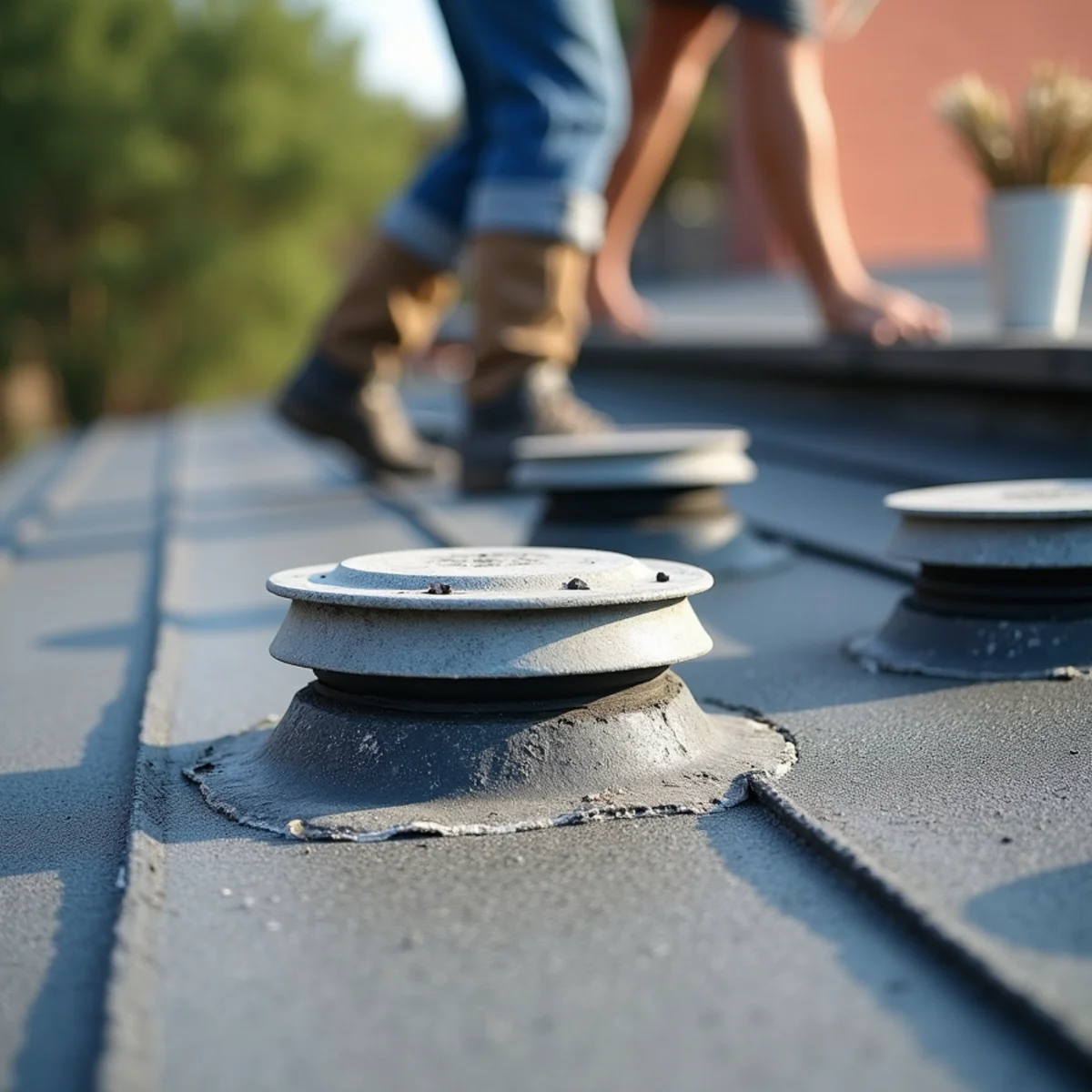
Aged pitch pocket and vent penetrations on a low-slope membrane roof 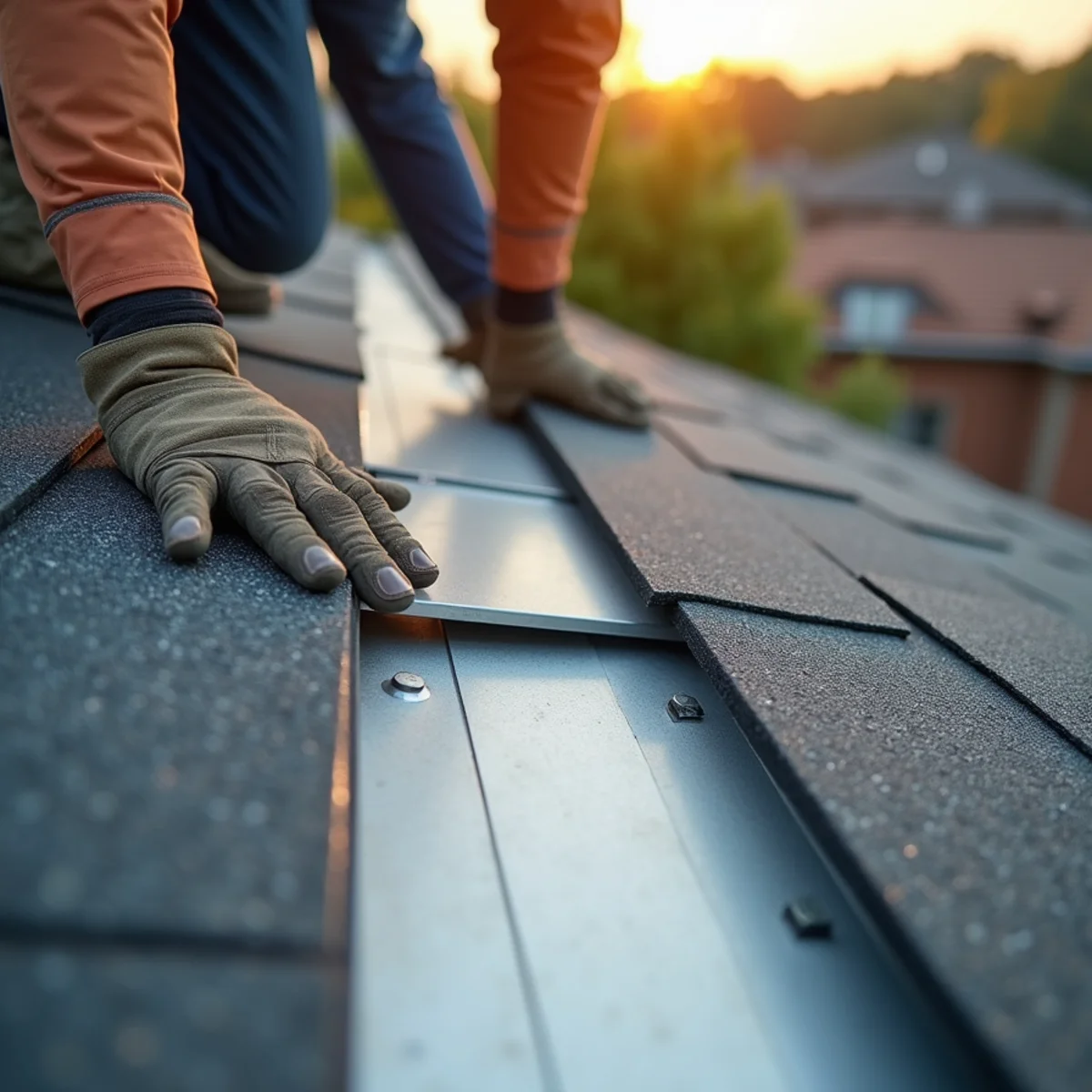
Transition between flat membrane deck and pitched shingle face on a triple-decker 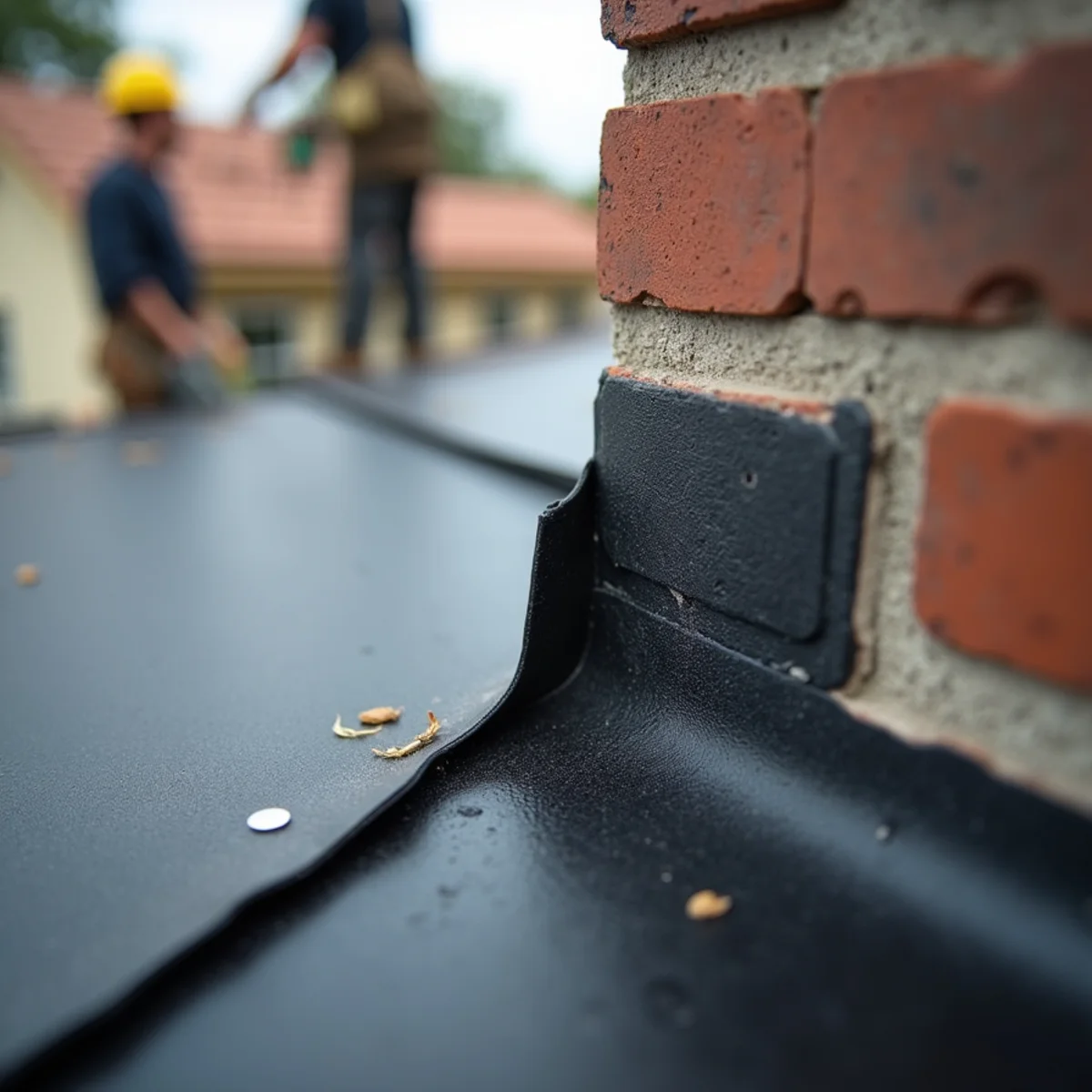
Membrane mechanically terminated at a wall with a metal bar and counterflashing
Frequently asked questions
EPDM is the sensible default for a residential triple-decker deck - lowest installed cost, good cold flexibility, and easy to repair years later. Choose TPO if you want a reflective white surface and welded seams, and PVC if there is grease or chemical exposure from a commercial tenant below.
Ponding is water that stays on the roof after a rain instead of draining. It concentrates dirt and growth, accelerates degradation, adds weight, and freezes and thaws repeatedly through the winter, which works on every seam and flashing it touches. It is the leading cause of premature flat-roof failure.
Very often it can be repaired. Most flat-roof leaks come from drains, parapet coping, penetrations, terminations or the transition to a pitched section rather than the field of the membrane. If the sheet is sound and the drainage works, targeted repair is the honest recommendation.
It helps with summer cooling load and it does no harm, but this is a heating-dominated climate, so the payback is smaller than it would be further south. It matters most on larger buildings, on top floors that overheat, and in dense neighbourhoods where the urban heat island effect is real.
Twice a year is realistic - after leaf drop and again in spring - plus after any major storm. The main task is clearing drains and scuppers and checking that nothing has punctured the membrane. Blocked drainage causes more flat-roof damage than weather does.