
The Best Time of Year to Replace a Roof in Massachusetts (and Whether Winter Roofing Works)
Every season here has a real trade-off, and the contractor who says any month is equally fine is selling. What actually changes between April, August, November and January — and when waiting costs you more than it saves.

Late spring through October is the sweet spot in Massachusetts, and September and October are the single best weeks of the year if you can get them.
But the more useful answer is that every season here has a genuine trade-off, and the right month depends on whether your roof can wait. A roof actively leaking in January does not get to hold out for June.
Here is what actually changes season to season, including the parts most contractors would rather not spell out.
Spring: good, once the ground firms up
March and early April are unreliable. We are still getting snow, the freeze-thaw cycle is at its most active, and staging equipment on saturated ground damages lawns and driveways.
From May onward it is genuinely good. Temperatures are warm enough for shingles to self-seal properly, days are long, and you go into the following winter with a new roof rather than a nervous one.
Spring is also when winter damage surfaces. If ice damming caused a leak in February, spring is when you find out what it did to the sheathing. That is a good moment for an inspection whether or not you were planning work - see our ice dam removal and prevention page for what we look for.
Summer: fully workable, with two caveats
June through August is prime roofing weather in terms of reliability. Long days, warm decks, excellent sealing.
The two caveats are real, though.
- Heat on the deck. A dark roof in direct August sun gets punishingly hot, and shingles can scuff under foot traffic. Good crews start early and work the shaded slopes in the afternoon. It is a scheduling problem, not a quality problem.
- Demand. Summer is when everyone books, so lead times stretch and the least selective crews are the ones with immediate availability. If a company can start tomorrow in July, ask why.
Autumn: the best window of the year
September and October are as good as it gets here. Moderate temperatures mean the deck is comfortable and shingles still seal reliably. Humidity has dropped. And you finish with a fully sealed roof going into the season it actually has to survive.
That last part matters more than people realise. A roof installed in September has weeks of warm days to fully activate its self-seal strips before the first nor'easter tests it. A roof installed in December has not.
Autumn is also when a free roof inspection pays for itself. Finding a lifted flashing or a packed valley in October costs a few hundred dollars. Finding it in February after six weeks of water behind your ceiling does not.
Winter: possible, and honestly harder
Yes, roofs get installed in Massachusetts winters. We do it. But anyone telling you it is exactly the same as August is not being straight with you.
What actually changes
- Shingles will not self-seal in the cold. The adhesive strip activates with heat. Below roughly 40 degrees it will not bond on its own, which means the shingles have to be hand-sealed with roofing cement at the correct points. That is extra labour and it has to be done properly or the roof is vulnerable to uplift until spring.
- Shingles get brittle. Cold asphalt can crack when bent or cut carelessly. Crews have to handle and store material differently.
- The weather window is short. We will not open a deck we cannot dry in before the next storm. That means shorter working days and more schedule slip.
- Snow and ice on the roof have to come off before anything starts, which is real time and real risk.
What is genuinely fine in winter
- Emergency work. Tarping, leak mitigation, storm damage. Never wait on this. Emergency roof repair runs year-round for a reason.
- Ice dam work. By definition a winter service.
- Most flat-roof repairs, depending on the membrane and the product's temperature limits.
- Inspections and estimates. We will walk your roof in January and give you a number for spring.
When waiting costs more than it saves
The case for holding off until spring evaporates fast in three situations.
- Active leak. Water in the assembly does not pause for the calendar. It rots sheathing, saturates insulation, and grows mould, and every week of it makes the eventual job bigger.
- Exposed or missing sections. Wind-lifted or storm-damaged areas need to be closed up now, even if the full replacement waits.
- Ice damming already happening. If your roof dammed last winter and nothing has changed in the attic, it will dam again. That is worth addressing before the next season rather than after - it is a ventilation and insulation problem, not a weather problem.
In those cases the right sequence is usually stabilise now, replace properly at the next good window. We will tell you honestly which one you are in.
Does off-season pricing exist?
Sometimes, modestly. Late autumn and winter are slower, and a crew with capacity may price more keenly than in a fully booked July.
But do not chase it. The saving on a winter install is usually smaller than people hope, and it comes with hand-sealing labour, weather delay, and a shorter window to get things right. Choosing a contractor on the strength of a seasonal discount is how people end up with the bid that skimped somewhere else - see our ice and water shield code guide for exactly where cheap bids usually cut.
What weather does to your schedule regardless
This region does not do predictable. Winter 2014-15 dropped 110.6 inches at Logan, the snowiest season since records began in 1891, with five storms in under four weeks. On 29 January 2022, 23.6 inches fell in a single calendar day.
A contractor who promises an exact date months out is guessing. What you should expect instead is a realistic window, daily communication when weather moves things, and a firm rule that no deck gets opened that cannot be dried in the same day. That is how we run jobs in Boston, Danvers and everywhere in between.
The practical plan
Get the inspection now, whatever month it is. If the roof can wait, book September or October and go into winter sealed. If it cannot, we will stabilise it now and do the permanent work at the first proper window.
Get a free roof estimate or call (209) 758-8550. The inspection is free in any season, and the estimate is yours to keep whichever month you decide on.
The points above, one at a time
A visual index of what each one actually looks like on a Massachusetts roof.
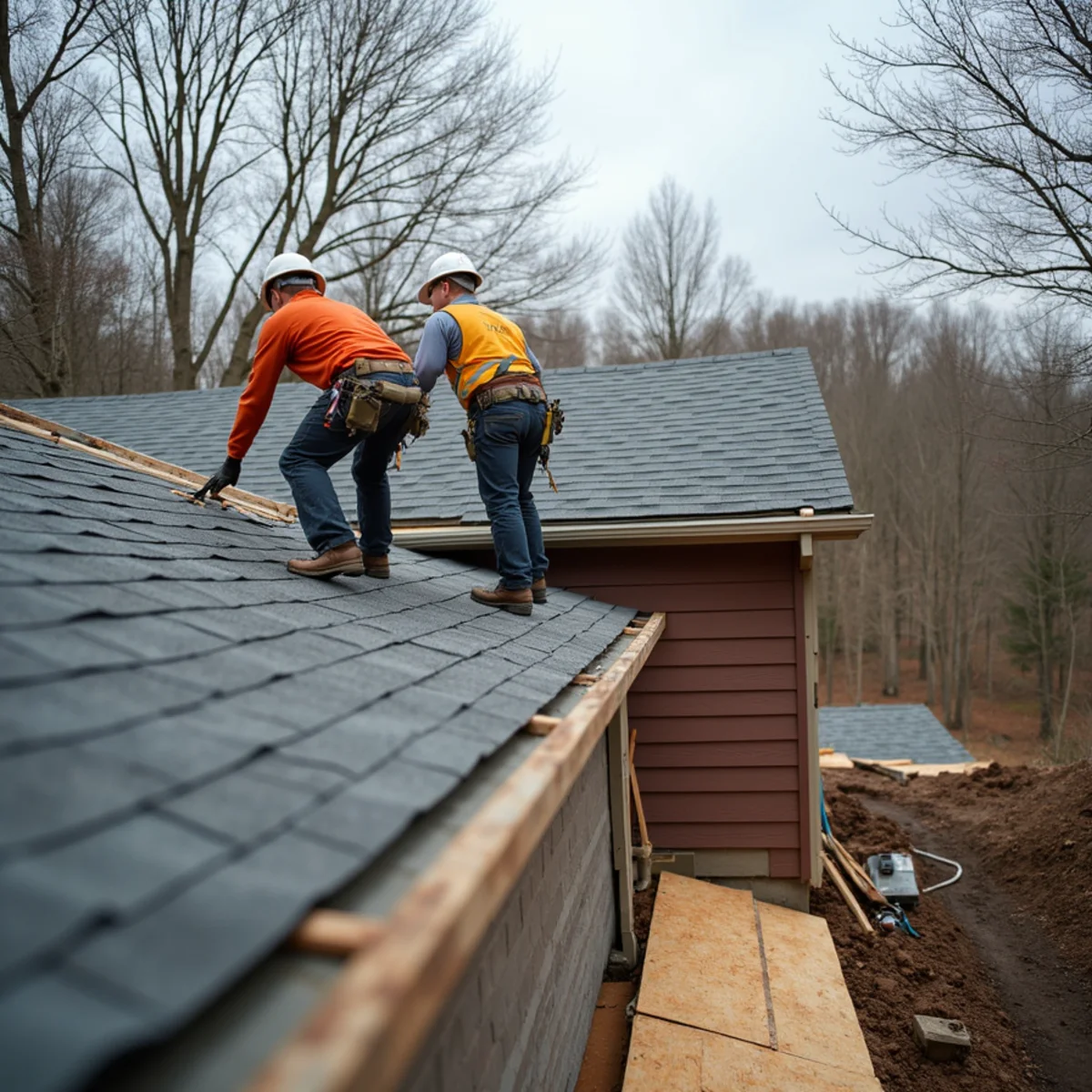
Spring roof replacement on a Massachusetts home with ground protection down 
Roofing crew starting early on a summer morning to beat the heat 
Autumn roof replacement in ideal New England installation weather 
Hand-sealing shingle tabs during a cold-weather winter roof installation
Frequently asked questions
Yes, with adjustments. Asphalt shingles will not self-seal below roughly 40 degrees because the adhesive strip activates with heat, so they have to be hand-sealed with roofing cement. Material handling changes because cold shingles get brittle, and we will not open a deck we cannot dry in before the next storm.
September and October. Temperatures are moderate enough that shingles seal reliably, humidity has dropped, and the roof has warm days to fully activate before winter. Those weeks book up early, so arrange the inspection in summer if you want that window.
Sometimes modestly, because late autumn and winter are slower. The saving is usually smaller than people expect and comes with hand-sealing labour and weather delay. It is not a strong enough reason on its own to choose one contractor over another.
No. Water in the assembly rots sheathing, saturates insulation and grows mould, and every week makes the eventual job larger and more expensive. The right sequence is to stabilise it now - tarping or targeted repair - and do the permanent replacement at the next good weather window.
It varies, which is the honest answer. A straightforward asphalt replacement is one to three days of actual work, but New England scheduling means that can spread across a week. Any contractor giving you a guaranteed date months in advance is guessing rather than planning.